What does matcha taste like?
Matcha tastes green and savory, with gentle sweetness, a creamy texture, and some bitterness. Depending on the powder and preparation, you may notice fresh leaves, steamed greens, or a faint nutty note. Water reveals those details; milk softens the flavor.

In this article (8)
- What flavors should you expect in your first sip?
- How does the matcha you choose change the flavor?
- What does matcha taste like with milk, ice, or food?
- Why does some matcha taste bitter or feel chalky?
- How can you prepare matcha to understand its taste?
- How do you keep matcha tasting fresh in UAE heat?
- Which matcha should you try next?
- Frequently asked questions
What flavors should you expect in your first sip?
Matcha has more body than many brewed teas because you drink finely ground Japanese green tea leaves suspended in liquid.
The first impression is often leafy, followed by a savory depth called umami: the mouth-filling quality you might recognize in mild vegetable broth. Some matcha suggests tender greens or a seaweed-like note, although these are tasting impressions rather than added ingredients. Gentle sweetness may appear as you swallow, especially when bitterness stays in balance. That sweetness is delicate. Someone expecting the sweetness of a café latte may overlook it at first, so take another small sip as the cup cools, paying attention to the finish as well as the initial green flavor.
Use these descriptions to put words to your first cup:
| Taste or sensation | What to notice |
|---|---|
| Green or vegetal | Fresh leaves or steamed greens |
| Umami | Rounded, savory depth |
| Gentle sweetness | Soft sweetness after swallowing |
| Bitterness | A sharp edge that balances or overwhelms |
| Astringency | Dryness on your tongue and gums |
| Creamy body | Smooth texture from evenly dispersed powder |
Bitterness is a flavor; astringency is a drying sensation. Separating them helps you describe what needs adjusting instead of simply calling the cup “strong.”
How does the matcha you choose change the flavor?
The powder sets the starting point. Preparation can adjust its flavor, but it cannot restore lost freshness.
Growing conditions, leaf selection, processing, and storage contribute to flavor, so Japanese origin alone does not tell you how a powder will taste. Grade descriptions explain intended use, although “ceremonial” and “premium” are not a universal scoring system for comparing suppliers. Matcha for drinking with water needs enough smoothness and balance to be enjoyable without milk or sweetener softening its edges. A latte powder needs a clear tea flavor that remains noticeable once milk is added. Your preferred drink is therefore the most useful starting point, followed by tasting the powder in that preparation.
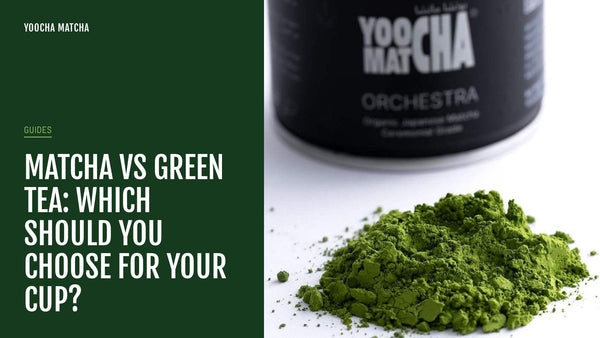
For drinking straight, YOOCHA MATCHA's Organic Ceremonial Grade Japanese Matcha Powder is intended for usucha (thin matcha) and koicha (thick matcha). Thin matcha is an easier introduction to its concentrated flavor.
When judging a powder, check:
- Clearly stated origin and intended use.
- Fresh aroma rather than stale or musty notes.
- Packaging that protects against air and moisture.
- Enjoyable flavor in your usual drink.
- A pack size that suits your routine.
Fresh green color offers a clue, but photographs and lighting make color comparisons unreliable.
What does matcha taste like with milk, ice, or food?
Milk softens matcha's sharper edges. Ice cools the drink, then gradually dilutes it as it melts.
If your first experience was a sweet café latte, the same tea whisked with water may seem much more vegetal because milk and syrup softened those flavors. Dairy milk usually adds rounded creaminess, while plant-based drinks bring their own character and vary between formulations. An oat drink can introduce a cereal-like flavor; coconut can become a prominent part of the cup. Sweetened milk adds another variable. Choose a milk you enjoy, then taste before adding syrup to judge how much tea flavor remains. A cold glass on a hot Dubai afternoon should still taste recognizably of matcha.
| How you use it | Likely impression | What can hide the tea |
|---|---|---|
| With water | Green notes, umami, distinct finish | Excessive concentration |
| Hot latte | Soft green flavor, creamy texture | Too much milk |
| Iced latte | Cool, milky, with a tea note | Melted ice and syrup |
| Smoothie | Leafy flavor within fruit and milk | Strong fruit flavors |
| Dessert | Green contrast to sweetness | Heavy flavorings |
High-Grown Premium Japanese Matcha Powder suits everyday cups and lattes within the YOOCHA MATCHA range. Taste it with your usual milk to judge the finished drink.
For desserts, start with a recipe written for matcha: adding powder changes the dry-ingredient balance as well as the flavor.
Why does some matcha taste bitter or feel chalky?
Some bitterness belongs in matcha. When it overwhelms everything else, examine the preparation and the powder.
Water that is too hot can make matcha taste harsher, while too much powder for the liquid can make it overpowering. These problems are easy to confuse because both produce a strong first impression, yet the adjustment differs: cool the water for one and dilute the drink for the other. Clumps create another problem. A pocket of dry powder can deliver a bitter burst even when the surrounding drink tastes mild, making the cup inconsistent. Sifting and thorough whisking distribute the powder evenly, helping you assess its flavor without those distracting patches.
Chalkiness concerns texture, and syrup rarely fixes it. Matcha forms a suspension rather than dissolving completely, so some settling is normal.
Let the symptom guide you:
- Harsh throughout: let the water cool before whisking.
- Overpowering: add a little water or milk.
- Bitter patches: sift and whisk thoroughly.
- Dry, rough finish: try a gentler preparation.
- Weak and milky: reduce the milk.
- Dull or stale: review storage and freshness.
Change one thing at a time. Keeping the rest of your preparation consistent makes it easier to identify what helped.
How can you prepare matcha to understand its taste?
Start with the package's preparation guidance and use the same cup for comparisons.
Your first tasting does not need a thick preparation or a large serving; a modest cup lets you explore without committing to an intensity you may dislike. Begin with water to recognize the powder's character, then add your usual milk and observe which notes soften. Sweetener can come last. This sequence helps because a heavily sweetened drink can conceal both pleasant subtleties and preparation problems, leaving you unsure what the matcha contributes. Keep the process relaxed, remembering that learning your preferences matters more than producing a photograph-ready surface or matching someone else's description of the flavor.
- Smell the powder. Notice a fresh, leafy, or muted aroma.
- Sift into a bowl. Break up clumps before adding water.
- Add warm water. Follow package quantities; avoid freshly boiling water.
- Whisk evenly. A chasen (bamboo whisk) disperses powder and creates light foam.
- Take a small sip. Notice the green flavor, savory body, and finish.
- Add your usual milk. Taste again before sweetening.
For a hot latte, add gently warmed milk to the whisked matcha. For an iced version, pour it over cold milk and ice, then stir so the first sip represents the whole drink.
Getting comfortable with the whisk takes practice. Foam alone does not tell you whether the cup tastes balanced.
How do you keep matcha tasting fresh in UAE heat?
Protect the powder from heat, air, light, and moisture to preserve its aroma.
In the UAE and GCC, keep an open tin in the fridge, tightly sealed and away from strong food odors. Before opening a refrigerated container, let it approach room temperature while still closed to reduce the risk of moisture condensing on the cold powder. Use a dry utensil, and avoid leaving the tin open beside a steaming kettle. A warm kitchen counter also works against freshness, even when it is a convenient place to prepare your morning cup. Return the sealed tin after use and follow any additional storage instructions supplied with the product.
Choose a pack around how often you drink matcha. The supplied YOOCHA MATCHA product and price list gives these High-Grown Premium matcha prices; check its linked page for current pricing.
| Pack size | Price |
|---|---|
| 40 g | From AED 62 |
| 100 g | From AED 127 |
| 250 g | From AED 279 |
Powder cost per cup = current pack price ÷ pack weight in grams × grams used per cup. This arithmetic excludes milk and sweetener.
Which matcha should you try next?
Choose around the drink you already enjoy. For iced café-style drinks, begin with a latte powder and familiar milk. To explore the tea's aroma and finish, try a powder intended for drinking with water.
Keep the comparison simple: prepare consistently, taste before sweetening, and adjust gradually. Several competing flavors make it harder to learn which qualities you enjoy in the tea itself.
Choose High-Grown Premium matcha for your usual latte or Organic Ceremonial matcha for drinking straight. The product pages linked above give the current pack options and preparation details.
Frequently asked questions
What does matcha taste like without sugar?
Green and savory, with some bitterness and delicate sweetness in the finish. That sweetness may be less obvious if you usually drink sweetened lattes.
Does matcha taste like grass?
Its leafy character can seem grassy. You may also notice savory depth and gentle sweetness; an aggressively grassy cup is worth trying at a lighter concentration.
Is matcha supposed to taste bitter?
A little bitterness can balance the cup. If it dominates, try cooler water or less powder, then check freshness and intended use.
What does an iced matcha latte taste like?
Creamy and green, with intensity shaped by the milk and sweetener. Stir before drinking so a layered glass gives you a balanced first sip.
Why does my matcha feel gritty?
Clumps or uneven mixing can feel gritty. Sift and whisk thoroughly, then stir again if the drink has been standing; some settling is normal.
Can I enjoy matcha if I dislike regular green tea?
Possibly. Its fuller texture and flavor with milk offer a different experience. Start with a latte and judge whether you enjoy the tea note.
Sources
- YOOCHA MATCHA company profile and editorial product brief: origin, intended uses, and regional storage guidance.
- YOOCHA MATCHA supplied product and price list: 40 g/AED 62, 100 g/AED 127, 250 g/AED 279. Current product-page prices take precedence.
- Cup-cost formula: arithmetic using pack price, pack weight, and grams used.
Keep reading