What Is Matcha Made Of? From Tea Leaf to Green Powder
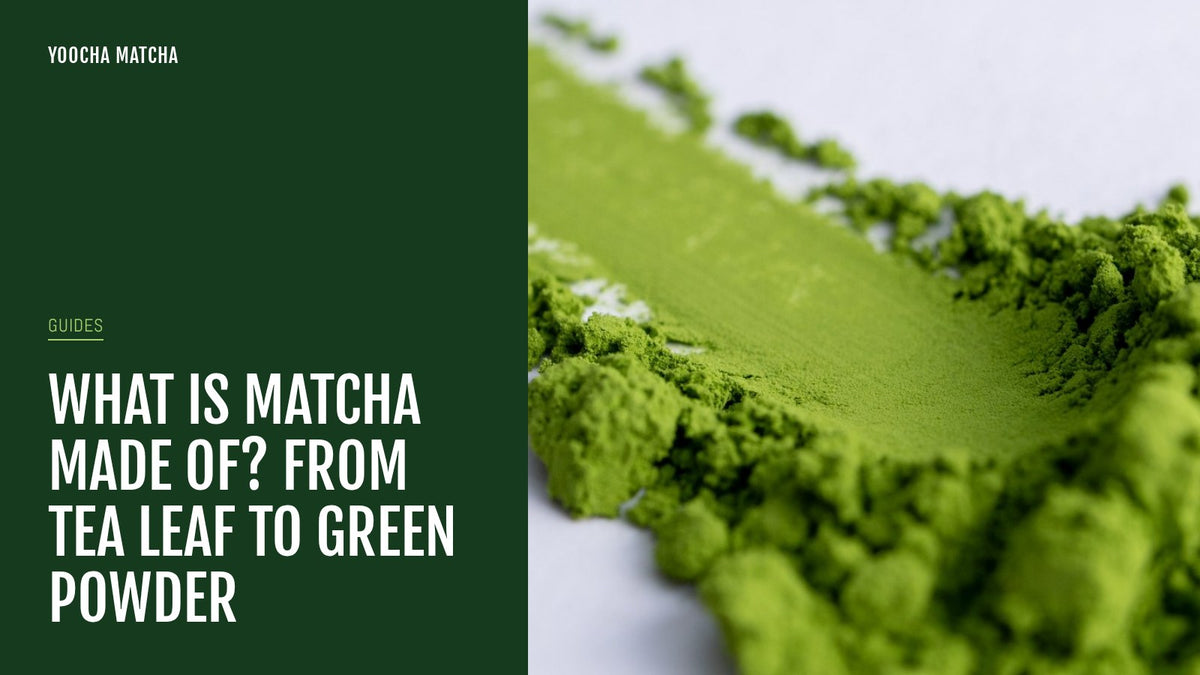
Matcha is made of shade-grown green tea leaves that are steamed, dried, sorted, and finely ground. Pure matcha contains only tea. Its raw material is tencha, the processed leaf prepared for grinding, which gives the powder its green color and savory flavor.

In this article (9)
- What ingredients should pure matcha contain?
- How do tea leaves become matcha powder?
- How is matcha different from ordinary green tea?
- What should good matcha look and taste like?
- How do you turn matcha powder into a smooth drink?
- Why does matcha cost more, and what does a cup cost?
- How should you store matcha in UAE and GCC heat?
- What should you check before buying matcha?
- Frequently asked questions
What ingredients should pure matcha contain?
Pure matcha has one ingredient: tea from Camellia sinensis, the plant used for other familiar teas.
What makes matcha different is the way the leaves are grown and processed before they reach your bowl. Producers shade the plants before harvest, then steam and dry the leaves to make tencha, the tea material prepared for grinding into matcha. During processing, stems and larger veins are removed, leaving the softer leaf material that becomes the finished powder. When you whisk matcha with water, you drink that finely ground material along with the liquid, so the texture matters as much as the aroma. The powder disperses rather than fully dissolves. That explains why a prepared cup can settle if you leave it standing.
Read the ingredients before judging the front of the pack.
| Label | What to check |
|---|---|
| Pure matcha | Tea should be the only ingredient |
| Matcha latte mix | Check for added sugar or milk powder |
| Powdered green tea | Confirm whether it is made from tencha |
| Prepared matcha latte | Ask whether it uses pure powder or a mix |
How do tea leaves become matcha powder?
Production begins in the field. Each stage affects what eventually reaches your bowl.
How does shading change the leaves?
Growers reduce sunlight before harvest. Shading affects the leaves’ pigments and flavor compounds, contributing to matcha’s green color and savory character.
Chlorophyll gives tea leaves their green color. Theanine, an amino acid naturally present in tea, also contributes to flavor, though its content cannot be judged from the word “ceremonial.” Cultivation methods and leaf selection vary between producers, so shaded teas can differ considerably even when their photographs look similar. Shading alone cannot establish quality; the prepared cup remains a useful test.
What happens during harvesting?
Leaves are harvested and processed while fresh. Leaf selection affects the finished tea, but an exact harvest season or picking method needs confirmation from the producer. Do not assume every matcha is hand-picked.
Why are the leaves steamed?
Steaming deactivates enzymes that cause oxidation, helping preserve the leaves’ green-tea character. Black tea processing deliberately encourages oxidation, which is one reason grinding another finished tea cannot reproduce matcha’s flavor.
What happens during drying and sorting?
The leaves are dried without the rolling used for many other Japanese green teas. This tea material is called tencha.
Refining removes stems and larger veins, leaving the delicate leaf portion for grinding.
How is tencha ground into matcha?
Prepared tencha is ground into a fine powder. Traditional stone mills are associated with matcha, though other milling equipment is used.
“Stone-milled” describes a method. It cannot establish leaf quality or freshness, and grinding cannot repair stale tea. Check the producer’s information before assuming how a powder was milled.
How is matcha different from ordinary green tea?
The plant is the same; processing and preparation change the drink.
With a leaf tea, hot water extracts flavor from the leaves, and you remove or strain them before drinking. Matcha stays in the cup as finely dispersed particles, producing a fuller texture and a more opaque appearance than a typical green-tea infusion. That difference also explains why a whisk is useful: it breaks up clumps and distributes the powder throughout the water, helping the first sip feel smoother. The leaf remains present. A little settling is therefore normal, particularly when a drink stands for a while, and stirring it again can redistribute the powder.
| Tea | What reaches your cup |
|---|---|
| Matcha | Finely ground tencha dispersed in water |
| Loose-leaf green tea | An infusion, with leaves removed |
| Other powdered green tea | Ground tea with potentially different flavor and texture |
| Hojicha | Roasted Japanese green tea, brewed or prepared from powder |
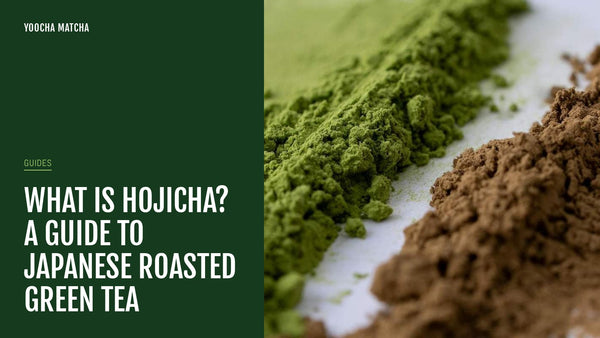
Hojicha’s brown tones and toasted aroma offer a different flavor for your morning latte. Both teas work with milk.
What should good matcha look and taste like?
Judge matcha in the drink you enjoy most.
A fresh-looking green powder is encouraging, while a dull appearance can be a reason to investigate storage or age. However, lighting and photography change how a product looks on your phone, and natural variation means you should avoid treating a particular shade as a universal quality score. Aroma adds another clue. Once prepared, matcha can taste grassy or gently savory, with a level of bitterness and astringency that depends on the tea and how you make it. Astringency is the drying sensation you notice in your mouth after a sip. Evaluate the whole cup before deciding whether a powder suits you.
“Ceremonial” usually signals tea for drinking with water. It is a commercial description without a universal, independently enforced grading standard. “Culinary” commonly describes powder selected for recipes.
Check:
- Ingredients: pure tea or a blend.
- Origin: a clearly stated country.
- Use: suitability for your usual drink.
- Freshness: aroma and storage guidance.
- Texture: smoothness after sifting and whisking.
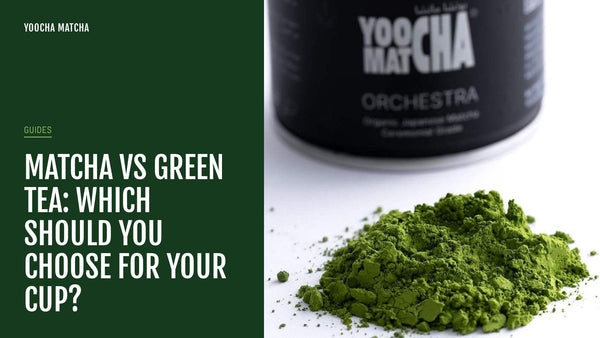
For drinking straight, YOOCHA MATCHA’s Organic Ceremonial Grade Japanese Matcha Powder suits usucha (thin matcha) and koicha (thick matcha).
How do you turn matcha powder into a smooth drink?
Whisk a water-based tea mixture before adding milk.
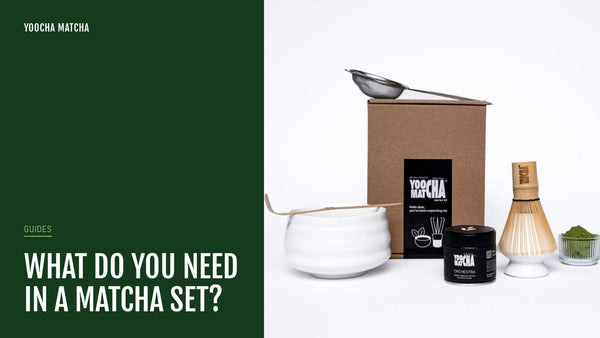
Because matcha contains fine leaf particles, simply dropping it into a full glass of milk can leave dry pockets surrounded by liquid. Sifting helps separate those particles before whisking, while a small working volume lets the whisk reach the powder more effectively than it can in a tall, filled glass. Your equipment matters too. A chasen (bamboo whisk) has fine tines that help disperse the tea, although careful preparation still matters more than chasing a thick layer of foam. Some matcha preparations have little foam. Aim first for an even texture and a flavor you enjoy.
Around 70–80 °C (158–176 °F) is a typical starting water temperature. Follow the pack’s quantities.
- Sift the measured powder into a roomy bowl.
- Add water and gently wet the powder.
- Whisk quickly back and forth, moving mainly from your wrist.
- Check for clumps, then pour.
For a hot latte, add warmed milk. For an iced version, pour over cold milk and ice; melting ice will dilute it.
If the flavor is harsh, try cooler water. For grit, check sifting and whisking, though preparation cannot fully compensate for coarse powder. It may take two or three tries to find your rhythm.
Why does matcha cost more, and what does a cup cost?
The work begins well before grinding.
Shading and the processing of tencha add work before milling begins, while refining the leaf and producing a fine powder require further equipment and care. Packaging also matters because the finished powder needs protection from moisture and air, especially once a pack starts moving between storage and daily use. Price alone proves little. A higher retail price does not automatically make a tea the right choice for a milk-heavy latte, where some delicate flavor differences may be less noticeable. Choose by use first. Then compare the cost of the amount you actually put into your cup.
For everyday cups and lattes, High-Grown Premium Japanese Matcha Powder has these supplied prices; check the page for changes.
| Pack | Price | Powder per 2 g cup |
|---|---|---|
| 40 g | 62 AED | 3.10 AED |
| 100 g | 127 AED | 2.54 AED |
| 250 g | 279 AED | About 2.23 AED |
Divide price by pack weight, then multiply by 2 g. Milk and sweetener cost extra.
How should you store matcha in UAE and GCC heat?
Keep an opened tin in the fridge, protected from light and moisture.
The detail that needs care is condensation: opening a cold tin in warm, humid air can allow moisture to collect inside and affect the powder. Keep the container tightly closed while it comes toward room temperature, then open it briefly to measure what you need with a clean, dry utensil. Close it promptly afterward. An airtight container also helps protect the tea from fridge odors, which can interfere with the aroma you expect when the powder meets warm water. Follow the pack’s storage instructions alongside this guidance. Avoid leaving the tin beside a sunny window or a hot appliance.
For daily use:
- Keep the tin away from steam.
- Retain tightly sealed, light-protective packaging.
- Buy a pack size that matches your routine.
For Ramadan evenings or Eid gatherings, measure near serving time and close the tin promptly.
What should you check before buying matcha?
Understanding the route from shaded leaf to tencha and then powder helps you ask useful questions, without relying on a bright photograph or a grade name alone. Look for a supplier who can explain how the tea performs with water or milk, and choose a pack you can store properly in your kitchen. Your usual drink is the benchmark. For a first purchase, use the product options above to match the powder to your routine, then adjust preparation before deciding that you need a different grade. Small changes can be enough.
For cafés, request a sample or tasting and test your menu recipe.
Frequently asked questions
Is matcha made from the same plant as green tea?
Yes: Camellia sinensis. Shading and processing the leaves into tencha distinguish matcha.
Is matcha just crushed green tea leaves?
Its raw material is specially prepared tencha. Crushing a green tea bag will not reproduce matcha’s texture or flavor.
Does pure matcha contain sugar or milk?
No. These enter during drink preparation or may be included in a latte mix. Check the ingredients.
Is all matcha stone-milled?
No. Other milling equipment is also used; check the producer’s information.
Does matcha contain caffeine?
Yes. Koláčková et al. reported 18.9–44.4 mg/g in analyzed matcha: approximately 38–89 mg per 2 g by calculation. These are reference figures, not measurements of YOOCHA MATCHA powders. Milk and ice do not change the powder’s caffeine contribution.
Why does matcha settle?
Leaf particles disperse without fully dissolving. Some settling is normal; a gentle stir redistributes them.
Sources
- YOOCHA MATCHA product information and supplied editorial brief: uses, pack weights, AED prices, storage and the 2 g serving reference; cup costs calculated from price and weight.
- Japan Tea Central Public Interest Incorporated Association: tea production and classification.
- General matcha preparation practice: typical water range of 70–80 °C (158–176 °F).
- Koláčková T. et al., Plant Foods for Human Nutrition (2020), 75:48–53, doi:10.1007/s11130-019-00777-z: caffeine range; also cited in Kochman J. et al., Molecules (2021), 26(1):85.
Keep reading