Can You Make Your Own Matcha Powder from Tea Leaves?
You can grind tea leaves at home, but making genuine matcha powder requires specially processed tea. Matcha begins with shade-grown leaves prepared as tencha, the tea material milled into matcha. A kitchen grinder can produce powdered green tea, although its texture and flavor will differ from Japanese matcha.

In this article (9)
- What makes tea leaves suitable for matcha?
- How does Japanese tea become matcha powder?
- How is matcha different from other green tea powders?
- What happens if you grind green tea at home?
- How do you prepare purchased matcha at home?
- Which matcha suits the drink you want?
- How should you store powder in UAE and GCC heat?
- Frequently asked questions
- Start with the powder that fits your cup
What makes tea leaves suitable for matcha?
Matcha starts with how the leaves are grown and processed. Grinding is the final stage of a much longer production method.
In Japanese matcha production, growers shade tea gardens for about 2–3 weeks before picking, using coverings that reduce the sunlight reaching the leaves. After harvesting, the leaves are steamed and dried without rolling, creating the material known as tencha. Preparing that material for milling also involves separating out stems and larger veins, which helps create a more consistent powder from the leaf tissue. These earlier stages matter because a grinder cannot reproduce the effects of cultivation or undo a different processing method. The starting leaf determines much of the result. Texture comes later.
That explains why a bag of ordinary green tea cannot become the same product simply by spending longer in a blender. Even if the leaves turn into a green powder, their original processing still shapes the aroma and the way the drink tastes.
When you assess a tea intended for grinding, look for information that answers these questions:
- Is the material identified as tencha?
- Is its Japanese origin stated?
- Was it prepared specifically for matcha production?
- Does the supplier explain how to store and use it?
A loose-leaf tea labeled “Japanese green tea” gives you an origin and a broad category. It does not, by itself, tell you that the leaves are suitable for producing matcha.
How does Japanese tea become matcha powder?
Traditional matcha production connects careful leaf preparation with controlled milling. Each stage affects what eventually reaches your bowl.
According to Japan’s Ministry of Agriculture, Forestry and Fisheries, leaves intended for tencha are steamed and dried without rolling before being ground into matcha in a stone mill or similar equipment. That distinction matters when you compare matcha with familiar loose-leaf teas, because the dried material has already followed a particular production route before milling begins. The mill then reduces the prepared leaf into a powder fine enough to disperse through water when whisked. It does not make the tea dissolve, and some settling after preparation is normal. You are drinking suspended tea particles. Give the cup a gentle swirl.
The main stages follow this order:
- Shade the tea gardens. Coverings reduce sunlight for about 2–3 weeks before picking.
- Harvest and steam the leaves. Steaming limits the oxidation that would otherwise change the freshly picked material.
- Dry without rolling. This processing route produces tencha rather than a rolled loose-leaf tea.
- Prepare the leaf material. Stems and larger veins are separated before final milling.
- Mill into a fine powder. The prepared tencha becomes matcha.
Japanese tea makers commonly give an output of about 40–50 g per hour for a granite stone mill. That figure illustrates the pace of this equipment; it is not a production specification for every mill or a claim about YOOCHA MATCHA’s own supply.
A household grinder works very differently. Its ability to turn leaves into small pieces does not establish that it can produce the same particle size or drinking texture.
How is matcha different from other green tea powders?
Powdered green tea describes a form, while matcha also describes its preparation. The difference becomes especially clear when you drink it with water alone.
| Tea or powder | How it is prepared | What to expect at home |
|---|---|---|
| Matcha | Prepared tencha is finely milled | A powder whisked into water, with texture depending on milling and preparation |
| Sencha | Japanese green tea typically steamed, rolled, and dried | Usually brewed as loose leaves; grinding it produces a different green tea powder |
| Ground tea-bag leaves | Finished tea leaves are ground further | Variable flavor and a greater chance of a coarse or uneven texture |
| Hojicha powder | Roasted Japanese green tea is milled | A brown powder with a toasted flavor for drinks and desserts |
The word “powder” can make these products seem interchangeable, especially when a recipe hides the tea beneath milk or other ingredients. Yet leaf processing remains noticeable: roasted tea brings a toasted aroma, while a ground green tea retains the character of the leaves used to make it. Milk may soften differences in flavor, but it cannot remove coarse particles or turn one tea’s production history into another’s. Color is useful as an observation, although lighting and storage conditions can change how a powder appears. Read the description alongside the color. Both deserve attention.
For a home experiment, keep the name clear. Calling your result “ground green tea” tells you what you have made without implying that ordinary leaves have undergone matcha production.
The same distinction helps when shopping online in the UAE or GCC. Look for an explanation of the tea and its intended use, rather than relying on a photograph of a green drink.
What happens if you grind green tea at home?
A kitchen grinder can reduce dry leaves into smaller particles. The main limitation is usually the texture of the finished drink.
Home grinders often leave a mixture of fine dust and larger fragments, so the powder may feel sandy even after you pass it through a kitchen sieve. Sifting can remove some coarse pieces, but a household sieve cannot make the remaining particles uniformly fine or correct the flavor of the original tea. Repeated grinding also exposes the tea to more air, and the equipment may warm during use, making longer processing an uncertain route to a better result. A grinder previously used for coffee or spices can introduce unwanted aromas as well. Start with clean, dry equipment. Keep expectations modest.
If you want to explore the difference using tea you already own, treat it as a small kitchen experiment:
- Check the leaves. Use dry tea that smells fresh, following its storage instructions.
- Clean and dry the grinder. Remove lingering coffee or spice residue before adding the tea.
- Grind according to the equipment instructions. Avoid running the appliance beyond its intended use.
- Sift the result. Separate obvious fragments from the finer material.
- Try a small preparation. Assess its aroma and texture before adding it to a whole recipe.
- Store the remainder airtight. Label it as ground green tea so it stays distinct from purchased matcha.
Expect some material to remain in the sieve. Pushing those fragments through does not solve the underlying texture problem.
A blender, mortar, and coffee grinder may each give different results, but none should be assumed to reproduce a tea mill simply because the finished material looks powdery.
How do you prepare purchased matcha at home?
Buying finished matcha lets you concentrate on preparing the drink. Your main tasks are dispersing the powder and adjusting the flavor.
Matcha does not dissolve like a soluble drink powder, so pouring water over it and stirring casually can leave dry pockets inside floating clumps. Sifting first helps separate those clumps, while whisking distributes the particles through the water and can create a light layer of foam. For a warm drink, water around 70–80 °C (158–176 °F) is a common starting range, although the best preparation depends on the tea and your taste. Use the amount suggested for your product, then adjust one element at a time so that you can understand the difference. Let taste guide the next cup. Foam takes practice.
Prepare the drink in this order:
- Sift the matcha into a bowl. Use the serving amount recommended for the tea.
- Add warm water. Start around 70–80 °C (158–176 °F), adjusting according to the product guidance.
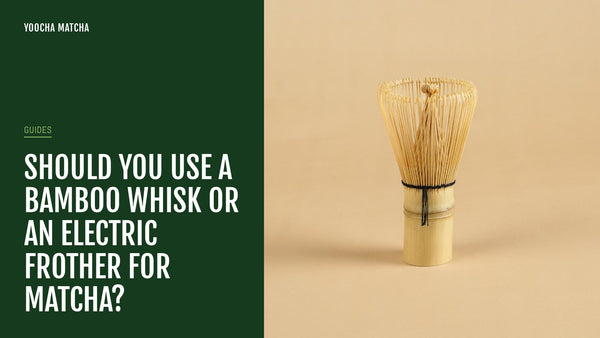
- Whisk with a chasen (bamboo whisk). Move your wrist forward and backward in a quick M-shaped zigzag.
- Keep the whisking brief. About 15 seconds is a practical starting point for combining the powder and water.
- Finish for your chosen drink. Drink the prepared matcha with water, or add it to milk for a latte.
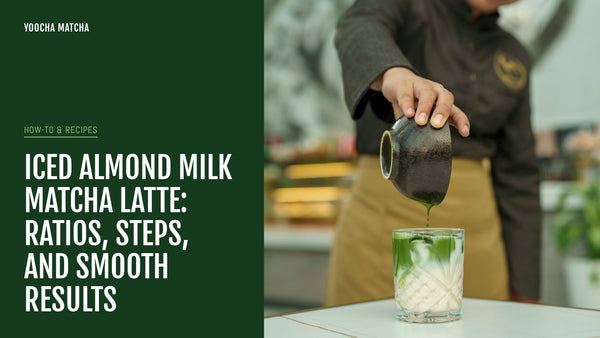
For a hot latte, combine the whisked matcha with warmed milk. For an iced version, prepare the matcha with warm water first, then pour it into cold milk over ice; this helps prevent the dry powder from gathering into lumps.
On a hot Dubai afternoon, a cold glass can be the most appealing way to enjoy the tea. Start with a small drink while you learn your preferred balance, since milk and melting ice both affect how strongly the matcha comes through.
Which matcha suits the drink you want?
Choose your powder around the cup you actually enjoy drinking. A water-only preparation makes different demands from a milky iced latte.
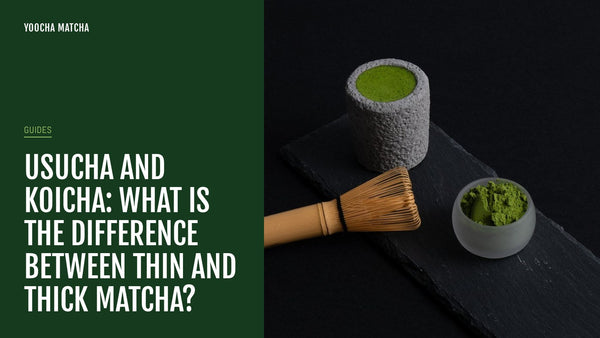
When matcha is prepared with water alone, there is little to soften its bitterness or disguise an uneven texture, so choosing a tea intended for that preparation matters. Usucha (thin matcha) is a lighter preparation, while koicha (thick matcha) uses a more concentrated balance and places greater emphasis on the tea’s texture and flavor. YOOCHA MATCHA’s Organic Ceremonial Grade Japanese Matcha Powder is intended for these water-based preparations. A latte needs a flavor that remains noticeable alongside milk, and everyday suitability becomes especially relevant when that is your morning routine. Begin with your usual drink. Then explore other preparations.
For home lattes, High-Grown Premium Japanese Matcha Powder is the YOOCHA MATCHA option intended for everyday cups and milk drinks.
Its listed pack sizes and prices are:
- 40 g: from 62 AED.
- 100 g: from 127 AED.
- 250 g: from 279 AED.
Check the product page for current pricing before ordering. A smaller pack can be useful while you establish your preferences, particularly if you are still alternating between straight matcha and lattes.
For café purchasing, evaluate the powder in the actual drink you plan to serve. Milk choice and serving size affect the result, so a tasting provides more useful evidence than judging the dry powder alone.
How should you store powder in UAE and GCC heat?
Heat and moisture make careful storage especially useful in this region. Protect both purchased matcha and any ground tea you prepare yourself.
For an opened matcha tin in a hot UAE or GCC kitchen, refrigeration can help protect freshness, provided the container is sealed tightly against moisture and nearby food aromas. Keep the tin closed while it comes toward room temperature before opening, because exposing cold powder to warm, humid air can encourage condensation inside the container. Use a clean, dry utensil whenever you measure the tea, and close the lid promptly instead of leaving it beside the kettle while you prepare milk. A good storage routine is simple. Repeat it each time.
Keep these habits consistent:
- Seal the container tightly after use.
- Store the opened tin in the fridge during hot conditions.
- Let the sealed container warm before opening.
- Keep wet utensils away from the powder.
- Follow the product’s storage and date guidance.
Fresh powder should retain the aroma and color you expect from that tea. A change in either can indicate that storage has affected it, although appearance alone cannot establish its quality.
If you are preparing drinks for guests during Ramadan evenings or an Eid gathering, measure what you need and close the tin before serving. That keeps the remaining powder away from splashes and the heat of a busy kitchen.
Frequently asked questions
Can I use green tea bags to make matcha?
Grinding tea-bag leaves produces ground tea. Unless the material was prepared as tencha for matcha production, further grinding will not give it the same processing history or expected drinking texture.
Can a coffee grinder make the powder fine enough?
It may make a fine-looking powder, but the drink can still feel gritty because the particles are uneven. Coffee residue may also affect the aroma, even when little is visible.
Does matcha dissolve completely in water?
Matcha disperses through water as small tea particles rather than dissolving. Some settling is normal, and a gentle swirl can bring the drink back together.
Can I make matcha from leaves grown in my garden?
Producing a comparable tea would require suitable cultivation and processing before milling. Drying garden-grown tea leaves and crushing them does not reproduce the tencha production method.
Why does my homemade powder taste bitter?
The original tea and the preparation both matter. For purchased matcha, try adjusting water temperature and concentration before assuming that the powder itself is unsuitable.
Is homemade ground tea useful for baking?
It can add tea flavor, although coarse particles may remain noticeable. Test it in a small recipe first; ordinary ground green tea will not necessarily give the same color or flavor as matcha.
Start with the powder that fits your cup
Making ground tea at home can be an interesting experiment. For a smooth matcha drink, buying a powder prepared from tencha is the more dependable starting point.
Choose a grade intended for drinking straight if you enjoy tea with water alone, or an everyday latte grade if milk is part of your usual cup. Then focus on sifting, water temperature, and whisking—the parts of preparation you can readily adjust at home.
Sources
- Japan’s Ministry of Agriculture, Forestry and Fisheries, “茶をめぐる情勢,” October 2026. Source for shading tea gardens for about 2–3 weeks and processing tencha through steaming and drying without rolling before milling. MAFF tea industry report.
- YOOCHA MATCHA editorial background: Japanese matcha production. Records the commonly cited Japanese tea-maker figure of about 40–50 g per hour for a granite stone mill; this is an indicative equipment figure.
- YOOCHA MATCHA product and preparation brief. Source for product uses, pack sizes, listed AED prices, regional storage guidance, and the M-shaped whisking method with an approximately 15-second preparation time.
- YOOCHA MATCHA article guidance on preparation. Provides around 70–80 °C (158–176 °F) as a typical water-temperature range, rather than a product-specific requirement.
Keep reading