Should You Use a Bamboo Whisk or an Electric Frother for Matcha?
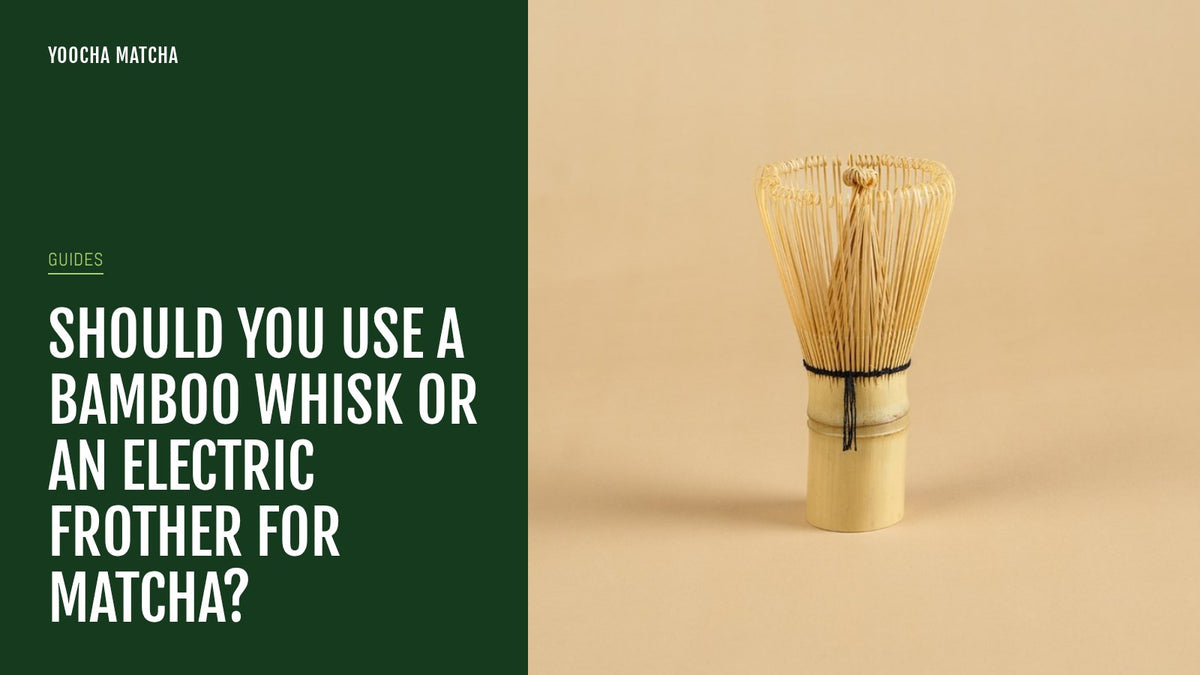
A bamboo matcha whisk suits straight tea, while an electric frother works well for lattes. Choose a chasen (bamboo whisk) when you want control over texture and fine foam. A handheld frother is convenient for mixing matcha before adding milk, especially for an iced drink on a hot UAE afternoon.

In this article (8)
How do the two tools compare?
The main difference is how each tool moves through the tea. Your choice should follow the drink you make most often.
A bamboo whisk spreads its flexible tines through the water, helping disperse sifted powder while introducing air with a controlled back-and-forth movement. An electric frother spins a small coil, which mixes quickly but can create larger bubbles or splash when the vessel is too shallow. Neither tool dissolves matcha completely: the ground tea leaf remains suspended in the water, so some settling is normal when a drink stands. Sifting helps either tool work more evenly because dry clumps can trap powder inside, leaving little pockets that feel chalky when you take a sip. Preparation still matters.
| What matters to you? | Bamboo whisk | Handheld electric frother |
|---|---|---|
| Straight matcha | Good control over texture and surface foam | Works, though foam varies with speed and technique |
| Hot latte | Mixes the tea base before milk is added | Convenient for mixing the tea base |
| Iced latte | Useful for preparing a smooth base | Practical when used before adding ice |
| Vessel | A bowl with room for wrist movement | A taller vessel with room above the liquid |
| Power | No batteries or charging | Depends on the model |
| Care | Rinse gently and air-dry | Clean the head according to its instructions |
A large cap of foam does not prove that the powder is evenly mixed. Look beneath the surface and check for dry specks or clumps before you add milk.
Which tool suits the way you drink matcha?
Start with your usual cup, then choose the tool around it. Straight tea makes small differences in preparation easier to notice.
For usucha (thin matcha), a bamboo whisk gives you direct control over the movement through a small amount of water, making it a sensible first choice. With a latte, milk changes the texture and softens the tea’s flavor, so the practical difference between tools often becomes less noticeable once everything is combined. An iced latte adds another consideration: prepare the matcha base separately, because ice gets in the way of the whisk and makes clumps harder to reach. For baking, the recipe’s mixing method usually matters more than a foamy surface, particularly when matcha is sifted into other dry ingredients. Choose for your routine.
Use these drinking habits to narrow the choice:
- Straight matcha: choose a bamboo whisk for control over mixing and foam.
- Hot lattes: either tool can prepare the tea base before you add milk.
- Iced lattes: a frother is convenient if you already have a suitable tall vessel.
- Baking: sift the powder and follow the recipe’s mixing method.
- Koicha (thick matcha): use a bamboo whisk with a gentle kneading movement; the aim is a thick texture rather than foam.
For drinking with water alone, YOOCHA MATCHA’s Organic Ceremonial Grade Japanese Matcha Powder is the grade intended for usucha and koicha. The tea and its preparation work together; changing the tool cannot make every powder suit every drink.
How do you get a smooth result with either tool?
Sift the powder first, whichever tool you plan to use. This gives you a more even starting point before mixing.
A standard starting recipe for usucha is 2 g matcha with 60 ml water at around 80 °C (176 °F), whisked vigorously for about 15 seconds. A scale gives you a more consistent dose than a scoop, although 2 g is approximately one level teaspoon according to the preparation guidance supplied for this article. With bamboo, work in an M-shaped zigzag using your wrist, moving forward and backward without grinding the tips against the bowl. The movement should travel through the tea rather than scrape the base, allowing the flexible tines to disperse the powder and build a fine surface foam. Keep your grip relaxed.
The details change slightly with each tool:
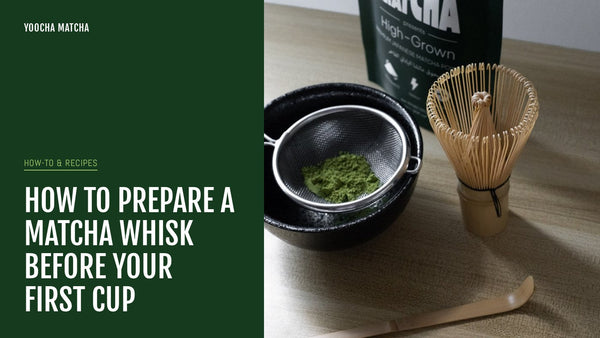
- With bamboo: soak the tips in water for 1–2 minutes before preparing the tea, then empty the soaking water.
- With a frother: use a taller vessel, keep the head submerged and start at a low speed if the model allows.
- Before finishing: check the bottom and sides for unmixed powder.
- For a hot latte: prepare the matcha base, then combine it with warm milk.
- For an iced latte: prepare the base separately, then pour it into milk and ice.
A frother can throw liquid upward when its spinning head breaks the surface, so leave room in the vessel and switch it off before lifting it out. Take a little time to learn the movement. It takes two or three tries to get the foam right, and that is normal.
How much does a cup cost?
Your powder dose determines the repeat cost of each cup. The whisk is a separate purchase that you use across many drinks.
For everyday lattes, High-Grown Premium Japanese Matcha Powder is the YOOCHA MATCHA option intended for that use, with several pack sizes available. Using a 2 g dose, divide the pack weight by two to calculate the number of servings, then divide the pack price by that yield. The figures below cover powder alone, so your finished latte will cost more once you include milk and any sweetener you choose to add. They also assume the full pack is used without waste, which makes them a comparison starting point rather than a promise about every cup. Your recipe sets the total.
| Pack size | Listed price* | Calculated 2 g servings | Powder cost per serving |
|---|---|---|---|
| 40 g | 62 AED | 20 | About 3.10 AED |
| 100 g | 127 AED | 50 | About 2.54 AED |
| 250 g | 279 AED | 125 | About 2.23 AED |
Prices supplied for this article; check the product page for the current price.
A larger pack lowers the calculated powder cost, but choose a size you can store carefully and use regularly. An existing frother also lets you start making lattes without buying another mixing tool immediately.
What should you check before blaming the tool?
Clumps and harsh flavor can have different causes in the cup. Changing your whisk may leave the underlying problem untouched.
If the powder goes into water without sifting, either tool may leave small lumps, especially when the mixture is poured into milk before you inspect it. Water temperature also affects the drinking experience, so use the preparation guidance as a starting point rather than pouring boiling water straight onto the powder. A large amount of milk can make the tea taste faint even when it has been mixed thoroughly, while a heavier powder dose changes both flavor and texture. Judge one adjustment at a time so you can tell whether the difference comes from the tea itself or the way you prepared it. Foam is only one clue.
Use this checklist when judging any matcha:
- Intended use: check whether the supplier recommends it for straight tea or lattes.
- Origin: look for a clear statement of where the matcha comes from.
- Color and aroma: notice the powder before adding milk; color alone does not establish quality.
- Clumps: sift before mixing and inspect the finished base.
- Recipe: measure the powder and water so you can repeat a cup you enjoy.
- Storage: keep the powder sealed and protected from heat and moisture.
In UAE and GCC summer heat, keep an open tin tightly sealed in the fridge. Let the sealed container reach room temperature before opening it, which helps limit condensation reaching the powder.
How do you care for each tool?
Good drying habits matter especially for a delicate bamboo whisk. Its thin tips need gentle handling before and after every cup.
After preparing matcha, rinse the chasen with clean water without soap, removing any powder caught between the tines while avoiding pressure that could bend or break them. Let it dry in open air on a whisk holder, because placing it back in its box while damp can allow mold to develop. Keep it out of the dishwasher and replace it when the tips break, rather than continuing to whisk with damaged bamboo in the bowl. An electric frother needs care too: follow its cleaning instructions, and keep the motor housing out of water unless the manufacturer explicitly says it can be immersed. Let both tools dry.
Before you buy, consider where the tool will live between cups. A bamboo whisk needs an open drying spot; a frother needs convenient access for cleaning and, depending on its design, charging or battery replacement.
Frequently asked questions
Can I make matcha with an electric frother?
Yes. Sift the powder, mix it with water in a suitable vessel and check for clumps before adding milk or ice.
Does a bamboo whisk make matcha taste better?
It can change texture and foam, which affect how the drink feels. The powder, dose and water temperature still shape the flavor.
Should I froth matcha directly in cold milk?
Preparing a separate water-based matcha mixture makes clumps easier to spot and work through, especially when you are learning. Add it to cold milk afterward.
Why does my matcha settle after mixing?
Matcha contains ground tea leaf suspended in liquid. Some settling is normal, so gently stir the drink if it has been standing.
Can I put a bamboo whisk in the dishwasher?
No. Rinse it without detergent and let it dry in open air on a holder.
Do I need a bamboo whisk for my first latte?
An electric frother you already own is a practical starting point. Choose bamboo if you also want to prepare straight matcha and develop that technique.
Choose a tool for your next cup
Keep using your frother if it suits your everyday latte. Practice sifting and measuring before deciding whether you need another tool.
If straight matcha is becoming part of your morning routine, the Chasen gives you a dedicated bamboo tool for learning the traditional whisking movement. Start with the standard usucha recipe above and adjust your technique as you become familiar with the texture you enjoy.
Sources
- YOOCHA MATCHA product and pricing brief supplied for this article: product uses, pack sizes, listed AED prices and regional storage guidance.
- Standard Japanese preparation and whisk-care guidance supplied in the article brief: 2 g matcha, approximately one level teaspoon, 60 ml water at 80 °C, about 15 seconds of whisking and 1–2 minutes of soaking.
- Editorial calculations from the supplied pack weights and prices: servings per pack and powder cost per 2 g serving. The Fahrenheit temperature is converted from the supplied Celsius figure.
Keep reading