Usucha and Koicha: What Is the Difference Between Thin and Thick Matcha?
Usucha (thin matcha) is light and whisked, while koicha (thick matcha) is concentrated and slowly kneaded. Both use Japanese matcha powder and water, but their proportions create very different drinks. Choose usucha for a flowing, everyday cup; try koicha when you want a dense texture and a more intense taste.

In this article (8)
How do usucha and koicha differ in the bowl?
The main difference is how much powder meets the water. Whisking then gives each preparation its characteristic texture and surface.
A standard usucha preparation uses 2 g of matcha with 60 ml of water, creating a drink you can sip easily, with fine foam when whisked briskly. Koicha uses 4 g with just 30 ml of water, so the mixture becomes much thicker and needs slow kneading to bring it together evenly. Both methods commonly use water around 80 °C (176 °F). These are preparation references, rather than a requirement to follow every movement exactly. Your bowl and whisk will also affect how easily the powder mixes. Start with the measured proportions.
| Detail | Usucha: thin matcha | Koicha: thick matcha |
|---|---|---|
| Matcha powder | 2 g | 4 g |
| Water | 60 ml | 30 ml |
| Reference water temperature | Around 80 °C (176 °F) | Around 80 °C (176 °F) |
| Whisk movement | Brisk back-and-forth strokes | Slow kneading |
| Approximate mixing time | 15 seconds | 15 seconds |
| Finished texture | Fluid, with fine foam | Dense, smooth, and glossy |
| Taste | More diluted and easier to explore | Concentrated, with little room for harshness to hide |
The names describe ways of preparing matcha, rather than separate plants. You can use the same suitable powder for both, although a matcha you enjoy as usucha may feel too forceful when prepared as koicha.
Which preparation should you try first?
Usucha is usually the easier starting point for drinking matcha straight. Its lighter texture gives you more space to notice the tea.
If you normally order a matcha latte, removing the milk will make the flavor feel more direct, even before you consider the stronger concentration of koicha. Begin with usucha and notice whether you enjoy the finish as well as the first sip. A little bitterness can belong to the tea’s character, but a rough or drying finish may become more prominent in a thicker preparation. Koicha concentrates everything in the bowl, including qualities you might overlook in a milk drink. Choose it when you already enjoy your powder with water alone and want to explore a denser expression of its flavor. There is no required progression.
Let the way you drink guide your choice:
- Straight and light: start with usucha.
- Straight and concentrated: explore koicha with a powder suitable for thick preparation.
- Hot latte: choose matcha intended for everyday cups and milk drinks.
- Iced latte: judge the powder in your usual milk, with the ice you actually use.
- Baking: choose for flavor in the finished recipe; the distinction between usucha and koicha does not determine baking suitability.
For either straight preparation, YOOCHA MATCHA’s Organic Ceremonial Grade Japanese Matcha Powder is the relevant option. It is intended for drinking with water, including both thin and thick matcha.
How do you prepare each style at home?
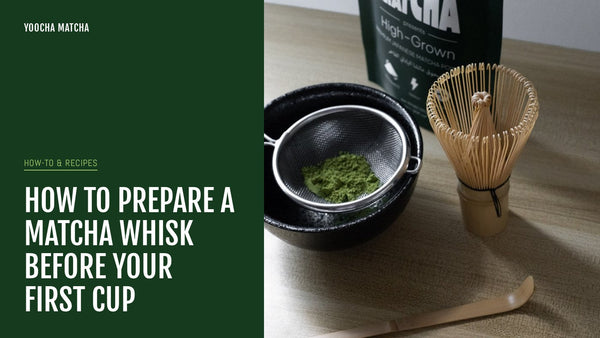
Start by measuring the powder and sifting it into a bowl. Small clumps are harder to break apart once the mixture thickens.
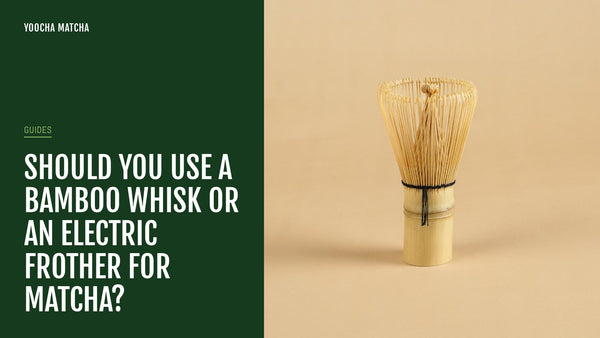
A chasen (bamboo whisk) helps disperse the powder through the water, while a bowl with room for movement makes the process easier to control. Matcha stays suspended in the drink rather than dissolving completely, so the aim is an even texture without dry pockets of powder. A scale gives you a more repeatable starting point than a scoop, although the teaspoon equivalents below can help when weighing is impractical. Warm the bowl first, then empty and dry it before adding the sifted matcha. Prepare your water before you begin so that you can mix and drink without unnecessary pauses. Keep the setup simple.
You will need:
- Matcha suitable for drinking straight.
- A bowl with enough room for whisk movement.
- A bamboo whisk.
- A fine strainer.
- A scale and a way to measure water.
- Water heated to around 80 °C (176 °F).
For usucha:
- Sift 2 g of matcha, approximately a level teaspoon, into the prepared bowl.
- Add 60 ml of water at around 80 °C (176 °F).
- Whisk briskly in an M-shaped, back-and-forth motion for about 15 seconds.
- Check that no dry clumps remain, then drink while the powder is evenly dispersed.
For koicha:
- Sift 4 g of matcha, approximately two level teaspoons, into the prepared bowl.
- Add 30 ml of water at around 80 °C (176 °F).
- Knead slowly with the whisk for about 15 seconds, working through any pockets of dry powder.
- Check for a smooth, cohesive texture; continue gently if the mixture is still uneven.
The movements matter because the goals differ: brisk whisking brings air into usucha, while slow kneading brings the concentrated koicha mixture together without aiming for foam. It takes two or three tries to get comfortable with the whisk, and that is normal.
Why does your matcha taste bitter or feel lumpy?
Bitterness and lumps need different adjustments, so change one thing at a time. Start with the water temperature and your measured proportions.
If you pour freshly boiled water directly onto matcha, let the next batch cool toward the reference temperature before mixing, then compare the flavor using the same powder and ratio. Harshness can also come from the tea itself or from a concentration you do not enjoy, which is particularly noticeable in koicha. Adding more whisking effort cannot remove that underlying flavor. Dry lumps are a separate problem: sift before adding water, and check that the whisk reaches the powder around the bowl. With koicha, move slowly enough to work through the mixture instead of pushing it around as a single mass. Texture gives you useful clues.
Use these checks to judge any matcha you buy:
- Intended use: look for clear guidance on drinking straight or mixing with milk.
- Origin: check that Japanese origin is stated when that is what you want.
- Color: look for a lively green appearance, while remembering that color alone cannot establish quality.
- Aroma: notice whether the opened powder smells fresh or stale.
- Taste: assess the tea at a measured ratio before adding sweetener.
- Packaging: look for a container you can close tightly between uses.
A thin layer of foam does not automatically mean you prepared usucha badly. Bowl shape and whisk technique affect the surface, so judge the smoothness and taste alongside the bubbles.
How much does each bowl cost?
Koicha uses twice as much powder as the standard usucha preparation. That makes its matcha cost twice as high from the same tin.
The YOOCHA MATCHA product information lists the ceremonial tin at 30 g, equivalent to 15 servings when you use 2 g for each bowl of usucha. Using the listed price of AED 169, dividing the tin price by those servings gives a powder cost of approximately AED 11.27 per bowl. At 4 g, a bowl of koicha uses approximately AED 22.53 of matcha from that same tin. These calculations cover powder only and use the listed price, which may change. They also assume you measure each serving and use the contents of the tin. The ratio explains the difference.
For everyday lattes, High-Grown Premium Japanese Matcha Powder is the product intended for that use. Compare the available pack sizes against how quickly you drink matcha, because a larger pack only suits your routine if you can keep it fresh through regular use.
How should you handle matcha in UAE and GCC heat?
Protect the powder from heat and moisture between your morning cups. In UAE and GCC summer conditions, keep an opened tin tightly sealed in the fridge.
Before opening a refrigerated tin, allow it to reach room temperature while still closed, because exposing cold powder to warm, humid air can introduce condensation. Use a dry utensil to measure the portion, then close the container promptly so that the remaining matcha spends less time exposed to air. Avoid leaving the tin beside a kettle or in direct sunlight while preparing your drink. Taking care of storage matters especially when you drink matcha straight, where milk and syrup are absent and changes in flavor are easier to notice. Buy a pack that fits your pace. Freshness needs a practical routine.
A cold glass may be more appealing on a hot Dubai afternoon. You can adapt a whisked matcha drink with ice, although melting ice changes the dilution and moves it away from the reference usucha ratio.
For a family gathering or a Ramadan evening, measure the powder and organize your tools ahead of serving. Mix the drinks close to when guests will enjoy them.
Frequently asked questions
Are usucha and koicha different grades of tea?
They are preparation styles. A powder’s suitability depends on how it tastes at the chosen concentration, so check whether the supplier recommends it for drinking straight and for thick preparation.
Can you use the same matcha for both?
Yes, if it is suitable for both methods. Try it as usucha first, because the thicker preparation will make its flavor much more concentrated.
Should koicha have foam?
Foam is not the goal. Knead gently until the mixture is smooth and glossy, rather than whisking briskly to introduce air.
Is koicha a good base for a latte?
A concentrated matcha mixture can be combined with milk, but koicha is intended to be appreciated as thick matcha with water. For a latte, choose your powder and proportions around the finished milk drink.
Does koicha contain more caffeine than usucha?
Using the same powder, the 4 g preparation contains roughly twice the caffeine of the 2 g preparation. YOOCHA MATCHA has not measured caffeine in its powders; published research ranges vary between samples.
Can you fix koicha that feels too thick?
Add water gradually and mix gently until the texture suits you. You will move away from the reference ratio, but the adjustment can help you understand which concentration you enjoy.
What should you make next?
Make usucha first, then try koicha with the same suitable powder. Keep the water temperature consistent so that the change in concentration is easier to taste.
Choose the ceremonial matcha described above for this comparison. Measure your portion, sift carefully, and let the texture in the bowl guide your next attempt.
Sources
- YOOCHA MATCHA product information and company preparation brief: product suitability; ceremonial tin size of 30 g; 15 servings at 2 g; listed price of AED 169; regional storage guidance. Per-bowl prices are calculations from these figures.
- Standard Japanese preparation methods supplied in the editorial brief: usucha uses 2 g with 60 ml of water; koicha uses 4 g with 30 ml; both use water around 80 °C (176 °F), with approximately 15 seconds of whisking or kneading.
- Koláčková T. et al., Plant Foods for Human Nutrition, 2020, 75:48–53, doi:10.1007/s11130-019-00777-z; cited in Kochman J. et al., Molecules, 2021, 26(1):85: published matcha caffeine analysis. The serving comparison here follows the amount of powder used and is not a measurement of YOOCHA MATCHA products.
Keep reading