Hojicha vs Matcha: Which Japanese Tea Should You Choose?
Choose hojicha for roasted, nutty flavor or matcha for a fresh green taste with savory depth. Both work hot or iced, with water or milk. Your usual drink is the best starting point: think about which tea flavor you want to taste through it.
In this article (9)
- What is the difference between hojicha and matcha?
- Which should you choose for your usual drink?
- Does matcha need to be ceremonial grade?
- How does the caffeine content compare?
- How do you make either powder taste good?
- How much does the tea cost per cup?
- How can you judge quality and store an open pack?
- Which powder should you try next?
- Frequently asked questions
What is the difference between hojicha and matcha?
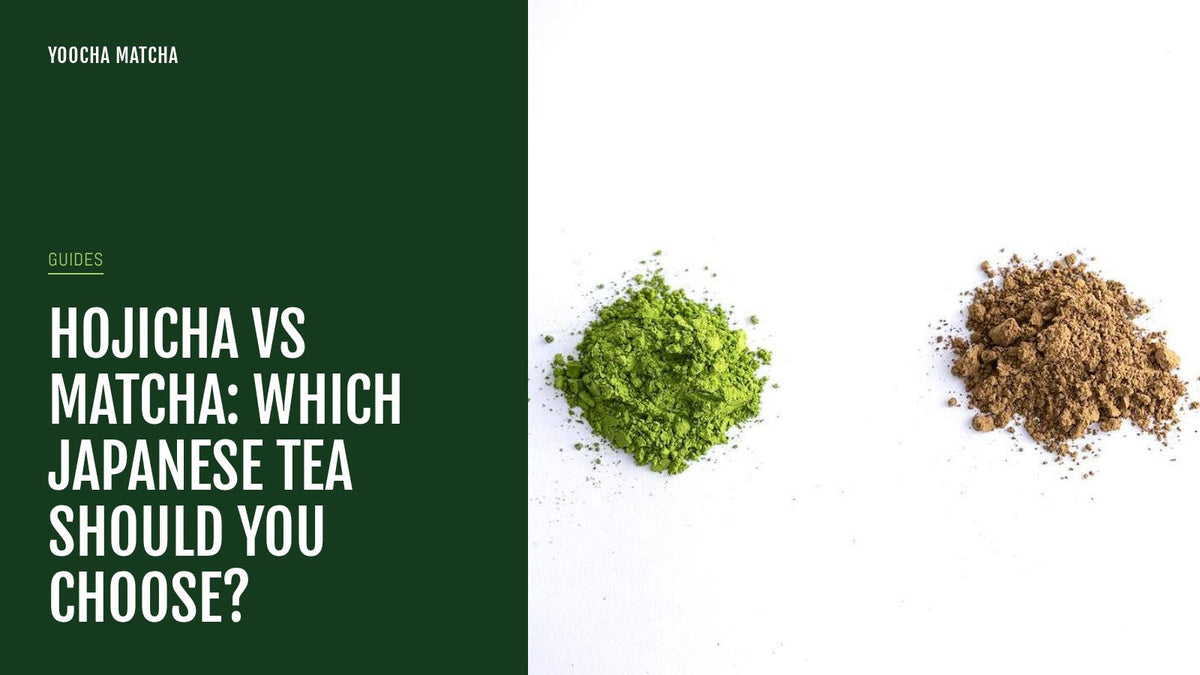
Roasting gives hojicha its brown color and toasted aroma, moving its flavor away from the fresh, leafy character of green tea. Matcha is finely ground tea made from shaded leaves; it keeps its green color and has umami, the savory depth you notice in a water-only cup. Milk softens both teas: hojicha gives a toasted base, while matcha keeps a green tea taste. Their formats also matter. Loose hojicha is steeped and strained; hojicha powder and matcha are mixed into the drink, so the ground tea stays in your cup.
| Feature | Hojicha powder | Matcha |
|---|---|---|
| Processing | Roasted, ground tea | Shaded, ground tea |
| Color | Brown | Green |
| Flavor | Toasty, nutty | Green, savory |
Which should you choose for your usual drink?
Milk changes the balance of a drink, so judge a latte powder in the milk you use at home rather than relying only on a water tasting. Matcha’s savory character can give an iced latte definition, while hojicha’s roasted notes suit a softer flavor familiar to many coffee drinkers. A little sweetness can change which flavors you notice first. Start with the tea itself, then adjust milk and sweetener separately so you can tell what each change contributes. For baking, choose the flavor you want to carry through the dessert.
- Straight: Green and savory matcha, or roasted hojicha.
- Latte, hot or iced: Test with your usual milk.
- Baking: Matcha for green tea flavor; hojicha for toastiness.
For lattes, try High-Grown Premium Japanese Matcha Powder.
Does matcha need to be ceremonial grade?
With water alone, you notice bitterness, texture and savory depth clearly because milk and syrup are absent, making suitability for straight drinking especially relevant. A latte has different demands: the tea needs enough character to stay noticeable after milk is added, and its price needs to suit everyday use. Paying more for a powder meant for straight drinking does not automatically make it your favorite latte ingredient. Match the powder to the cup. A supplier’s clear preparation advice helps you choose, since “ceremonial” is not a standardized grade across suppliers.
Organic Ceremonial Grade Japanese Matcha Powder suits usucha (thin matcha) and koicha (thick matcha).
How does the caffeine content compare?
Laboratory analysis by Koláčková and colleagues, also cited by Kochman and colleagues, reported 18.9–44.4 mg of caffeine per gram of matcha. Using that range, about 2 g of matcha gives approximately 38–89 mg of caffeine. This calculation uses published samples; YOOCHA MATCHA has not measured caffeine in its powders. Content varies between powders. Since you drink the whole powder, using more increases caffeine proportionally for that same powder. Milk, ice and syrup change dilution without changing total caffeine. Hojicha also contains caffeine, but no reference figure is available here for a numerical comparison.
How do you make either powder taste good?
For matcha, a typical starting water temperature is around 70–80 °C (158–176 °F), with adjustments guided by the powder and your taste. Very hot water can make bitterness more noticeable, although the amount of powder and the tea itself also influence the finished cup. For hojicha powder, follow the supplier’s preparation guidance, because a recipe for steeping roasted leaves may not suit ground tea. Keep your method consistent. Changing powder quantity, milk and sweetener together makes it harder to understand why one cup tastes better than another, so adjust one at a time.
- Sift the powder and mix with warm water.
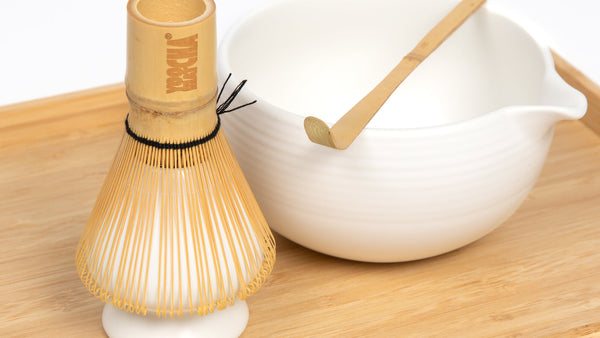
- For matcha, use a chasen (bamboo whisk).
- Add warm milk for a hot latte, or cold milk and ice.
- Taste before sweetening.
How much does the tea cost per cup?
At the listed retail prices, a 2 g portion of High-Grown Premium Japanese Matcha Powder costs about AED 3.10 from the 40 g pack at AED 62, AED 2.54 from the 100 g pack at AED 127, or AED 2.23 from the 250 g pack at AED 279. Premium Hojicha Powder costs AED 180 for 250 g, giving AED 1.44 per 2 g. These figures cover powder alone, using equal weights for comparison; your hojicha recipe may use more. Prices may change. Cafés should add milk, sweetener, packaging and waste to their actual recipe cost.
How can you judge quality and store an open pack?
A useful supplier explains origin, intended preparation and pack size so you can choose for your morning cup without guessing from a grade name. Once opened, compare aroma and flavor with the same method, since hotter water or a stronger dose can change the taste. In UAE and GCC heat, keep an open matcha tin tightly sealed in the fridge, away from moisture and food odors. Let the closed tin reach room temperature before opening to reduce condensation on the powder. Keep hojicha sealed and dry, following its pack’s storage guidance.
Check any matcha for:
- Clearly stated Japanese origin.
- Preparation advice for your drink.
- Fresh aroma and a flavor you enjoy.
- A pack size you can use regularly.
Which powder should you try next?
For toasted flavor, try Premium Hojicha Powder. For a café menu, request samples or a tasting and compare both teas in your recipes.
Frequently asked questions
Is hojicha a type of matcha?
No. Hojicha is roasted green tea; matcha comes from shaded leaves.
Does hojicha taste like coffee?
Its toasted aroma may appeal to coffee drinkers, though it tastes like tea.
Is hojicha caffeine-free?
No. Roasting does not make it caffeine-free.
Which is less bitter?
Hojicha generally tastes less bitter. Matcha depends on the powder and preparation.
Can I use plant-based milk?
Yes. Taste before sweetening, since milk changes the flavor.
Can I use hojicha in desserts?
Yes. Mix it with a little recipe liquid first to disperse it.
Sources
- YOOCHA MATCHA product listings: origins, uses, pack weights and AED prices; cup costs calculated at 2 g.
- Koláčková T. et al., Plant Foods for Human Nutrition (2020), 75:48–53, doi:10.1007/s11130-019-00777-z: caffeine range.
- Kochman J. et al., Molecules (2021), 26(1):85: caffeine review.
- YOOCHA MATCHA editorial guidance: typical water temperature and storage.