How to Make Matcha: Smooth Tea, Hot Lattes, and Iced Drinks
To make matcha, sift about 2 g of powder, add water around 70–80 °C (158–176 °F), and whisk until smooth. Use around 70 ml water for a straight cup or 40 ml for a latte base, then add milk and ice as you prefer.
In this article (9)
- Choose matcha for the drink you want
- Gather the tools for a smooth cup
- Set your ratio and water temperature
- Sift and whisk your first straight matcha
- Make a hot matcha latte
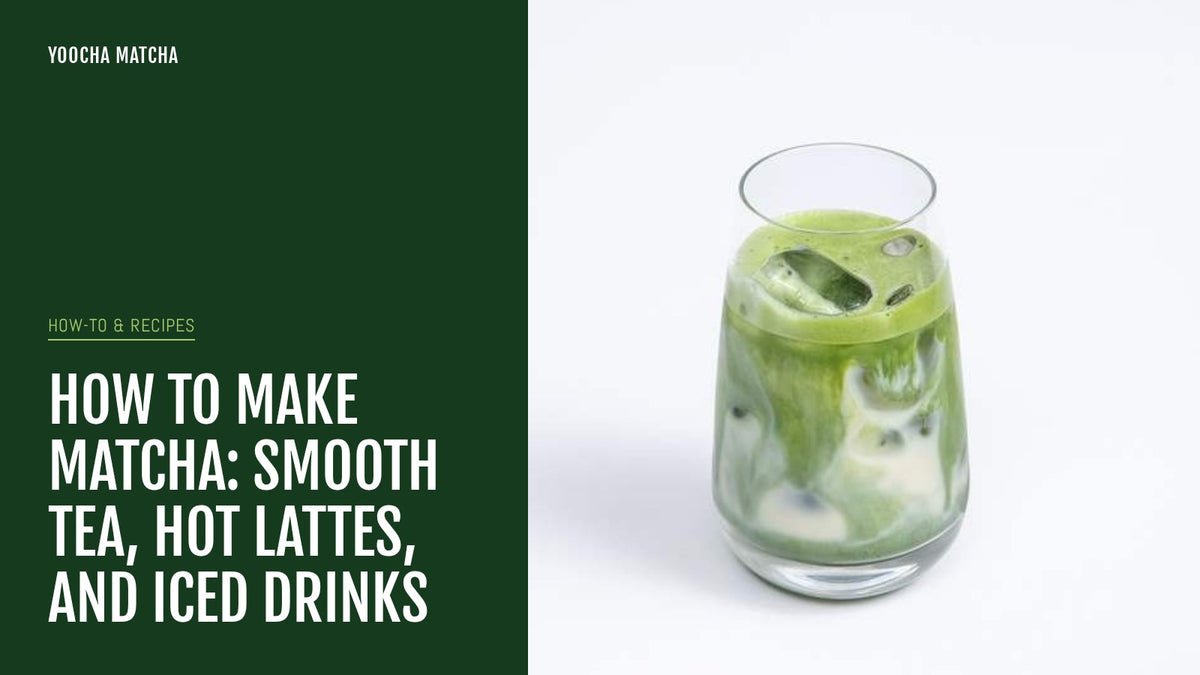
- Make an iced latte or iced matcha with water
- Fix clumps, bitterness, and weak flavor
- Protect your matcha from heat and moisture
- Frequently asked questions
Choose matcha for the drink you want
Start with the drink you already enjoy.
Matcha is Japanese green tea ground into a fine powder, which you whisk into water and drink together rather than steeping leaves and removing them. That explains why preparation matters: dry clumps remain noticeable, while a well-mixed cup feels more even from the first sip to the last. When you drink matcha straight, its flavor is exposed, so choose a powder intended for that use before adjusting your technique. Milk softens the tea’s flavor, and a latte needs enough powder to remain distinct beneath it. Begin with your usual drink. You can explore other preparations once you know what you like.
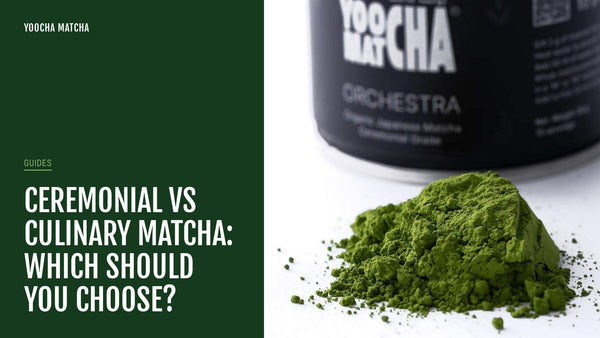
YOOCHA MATCHA’s Organic Ceremonial Grade Japanese Matcha Powder suits usucha (thin matcha) and koicha (thick matcha). Start with usucha.
“Ceremonial” and “premium” are not universal grades. Check Japanese origin and intended preparation alongside the powder’s color.
Gather the tools for a smooth cup
Give your whisk room to move.
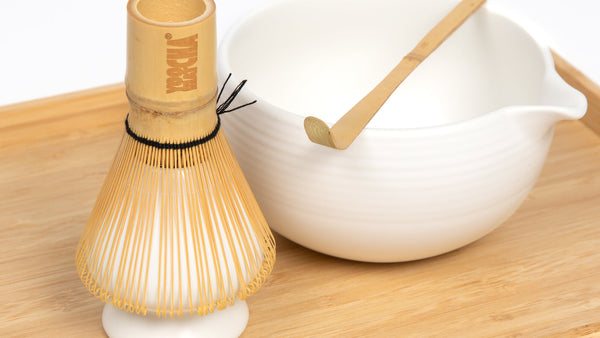
A chasen (bamboo whisk) has fine tines that help disperse matcha through water, while a wide bowl gives those tines room to move freely without striking the sides. A chawan (tea bowl) is the traditional vessel, although a suitably shaped kitchen bowl also works for everyday preparation. The chashaku (bamboo scoop) helps transfer powder, but the amount it holds changes with the shape of the scoop and how heavily you load it. A scale gives you a clearer starting point when comparing cups or correcting a drink that tastes too strong. Keep your setup simple. Each tool should solve a preparation problem.
Gather:
- Matcha powder.
- A small scale.
- A fine-mesh strainer.
- A wide bowl.
- A chasen or handheld milk frother.
- A kettle and thermometer.
- A cup or glass.
- Milk and ice for a latte.
Keep measuring tools dry. After use, rinse the whisk and let air circulate around its tines as it dries.
Set your ratio and water temperature
The recipes below are suggested home starting points, rather than fixed rules or measured specifications for YOOCHA MATCHA products. They use about 2 g of powder per drink, with less water in the latte base so the tea remains noticeable after adding milk. A straight cup gives the matcha more room to show its character; a concentrated base gives you flexibility with milk and ice. Your preferred strength may differ, especially when switching between dairy and plant-based milk. Change one thing at a time. Keep the powder consistent while you find the balance you enjoy.
| Drink | Matcha | Water | Add |
|---|---|---|---|
| Straight matcha | 2 g | 70 ml | Nothing |
| Hot latte | 2 g | 40 ml | 100 ml warm milk |
| Iced latte | 2 g | 40 ml | 100 ml cold milk and ice |
| Iced matcha with water | 2 g | 40 ml | 100 ml cold water and ice |
These quantities are approximate. For the warm base, use around 70–80 °C (158–176 °F), unless your powder’s instructions differ.
Very hot water can emphasize bitterness. Let boiled water cool and check it with a thermometer; a fixed waiting time is unreliable because water volumes and room temperatures vary.
Sift and whisk your first straight matcha
Aim for evenly mixed tea with a light surface foam.
Sifting breaks apart dry clumps before water makes their centers harder to reach, which is why this small step often improves texture more than vigorous whisking alone. The powder forms a suspension in the water, so some settling is normal if you leave your cup standing while answering a message or preparing breakfast. A light foam can make the drink feel pleasant, but foam depth alone does not tell you whether the matcha is good. Pay attention to the liquid beneath it as well. Smoothness comes first. The whisking motion becomes more familiar with practice.
- Prepare the bowl and whisk. Warm the bowl and soften the whisk’s tines in warm water. Empty and dry the bowl.
- Sift about 2 g matcha. Gently push the powder through a fine strainer into the bowl.
- Add around 70 ml water at 70–80 °C (158–176 °F). Move the whisk gently to wet the powder.
- Whisk in an M-shaped motion. Move your wrist briskly, keeping the tines in the liquid without scraping hard against the bowl.
- Finish near the surface. Lighten your movement to refine larger bubbles, then lift the whisk gently.
- Taste promptly. Add a little warm water if the tea feels too concentrated.
It takes two or three tries to get the foam right, and that is normal.
Koicha uses much less water relative to the powder and is worked into a thick consistency without aiming for foam. Follow separate preparation guidance for a powder intended for koicha.
Make a hot matcha latte
Whisk the tea before adding milk so you can see any clumps.
Milk changes both the strength and texture of a drink, so begin with a modest amount and taste before filling a large mug to the rim. Dairy milk and plant-based alternatives vary in sweetness and flavor, which means the same matcha recipe can taste noticeably different when you switch cartons. If you usually order a sweetened café latte, an unsweetened home version may seem unfamiliar even when the preparation is sound. Taste before making several adjustments together. Build your preferred cup gradually. The aim is a balance where you can still recognize the tea.
- Sift about 2 g matcha into a bowl.
- Whisk with around 40 ml water at 70–80 °C (158–176 °F), until no dry pockets remain.
- Warm around 100 ml milk. Avoid boiling; froth it for a lighter texture.
- Sweeten if desired. Stir sweetener into the warm base.
- Pour in the milk. Taste before adding more.
YOOCHA MATCHA’s High-Grown Premium Japanese Matcha Powder suits everyday cups and lattes.
At 2 g per drink, a 100 g pack makes about 50 servings. Using the supplied price of AED 127, the powder costs approximately AED 2.54 per cup, before milk or sweetener. Prices may change; check the product page before calculating your next batch.
Make an iced latte or iced matcha with water
On a hot Dubai afternoon, a cold glass is appealing, but adding extra ice and milk without considering the powder can leave the finished drink tasting faint. Ice continues to melt as you sip, so start with cold milk or water and keep the warm base small rather than pouring a full hot drink over ice. Layering looks attractive in a clear glass, although the layers need stirring before the first sip if you want a balanced flavor. Leave room for that final stir. Cold ingredients help preserve the balance. You can use the same preparation for an evening gathering at home.
- Sift about 2 g matcha. Whisk with around 40 ml water at 70–80 °C (158–176 °F).
- Stir any sweetener into the base.
- Fill your glass with ice and around 100 ml cold milk or cold water.
- Pour in the matcha and stir through the full depth of the glass.
For Ramadan evenings or Eid gatherings, set out dry tools and glasses ahead; mix close to serving.
Alternatively, sift and shake matcha with cold water in a securely closed shaker. Never shake hot liquid in a sealed container.
Fix clumps, bitterness, and weak flavor
A bitter cup can have several causes, so first check the water temperature and then consider the amount of matcha relative to the finished drink. If the texture is gritty, look for dry clumps and inspect whether your whisk has enough space to move through the liquid. A weak latte often needs less milk or less dilution from melting ice, while extra whisking will do little to restore missing tea flavor. Adjust one variable and taste again before changing another. Keep a brief recipe note. It makes your next morning cup easier to repeat.
| Problem | Check | Try |
|---|---|---|
| Dry lumps | Sifting and mixing | Sift; whisk the base separately |
| Harsh bitterness | Temperature and dose | Cool the water; measure powder |
| Weak latte | Milk and melting ice | Reduce added liquid |
| Large bubbles | Whisk movement | Finish lightly near the surface |
| Settling powder | Time since mixing | Stir gently before drinking |
Without a chasen, use a handheld milk frother in a tall vessel. Keep its head submerged to limit splashing; the bubbles and texture will differ from those made with bamboo.
Only have a spoon? Sift carefully, work the powder with a little water into a smooth paste, then gradually add the rest. A spoon takes more effort to break up clumps.
Protect your matcha from heat and moisture
In UAE and GCC heat, store an open tin in the fridge.
Keep the container tightly sealed and away from strong-smelling foods, because moisture and unwanted aromas can undermine the freshness you are trying to preserve. Before opening a refrigerated tin, allow the closed container to approach room temperature so condensation is less likely to form on the cold powder. Taking the lid off immediately in a warm, humid kitchen can introduce moisture even when your scoop appears completely dry. Close the tin promptly after measuring. Keep utensils dry throughout. Good storage supports good preparation without adding much work to your routine.
Buy a pack you can use regularly. For your next cup, choose the Ceremonial matcha linked above for drinking straight, or High-Grown Premium matcha for a latte, and follow one recipe.
Frequently asked questions
Can I make matcha without a bamboo whisk?
Yes. Sift, then use a milk frother with warm water or a sealed shaker with cold water. Expect a different texture.
How much matcha should I use per cup?
Start with about 2 g. Adjust the water or milk first so you can compare cups consistently.
Should I use boiling water for matcha?
Begin around 70–80 °C (158–176 °F). Very hot water can emphasize bitterness. Follow the powder’s instructions if they differ.
Why does my matcha settle at the bottom?
Matcha is suspended leaf powder, so some settling is normal. Stir gently. Dry lumps indicate incomplete mixing.
Can I add matcha powder directly to milk?
Yes, though smooth mixing is harder, especially with cold milk. A small water-based concentrate lets you spot clumps before adding milk.
Which matcha should I choose for my first drink?
Choose Ceremonial matcha for water alone. For a latte, start with the High-Grown Premium matcha linked above.
Sources
- YOOCHA MATCHA company profile and product brief: names, intended uses, origin, storage guidance, pack sizes and prices.
- Organic Ceremonial Grade Japanese Matcha Powder product-page information supplied in the brief: 30 g provides 15 servings, supporting a 2 g portion.
- Editorial recipe guidance: suggested water and milk quantities; around 70–80 °C (158–176 °F) is typical preparation practice, not a YOOCHA MATCHA specification.
- Cost arithmetic using supplied prices: 100 g ÷ 2 g = 50 servings; AED 127 ÷ 50 = AED 2.54 per serving of powder.