Where Did Matcha Originate? Its Roots in China and Development in Japan
Matcha as we know it comes from Japan, with powdered-tea roots in China. Earlier Chinese tea practices helped shape the drink that developed in Japan, where growers refined shading and leaf processing. That distinction explains why both countries appear in accounts of matcha’s history.

In this article (10)
- What is matcha, and why is its origin sometimes confusing?
- How did powdered tea travel from China to Japan?
- How did Japan develop the matcha we recognize today?
- Where in Japan is matcha produced?
- How does matcha differ from other Japanese green teas?
- What should you check when buying Japanese matcha?
- How is matcha used beyond a traditional bowl?
- How should you store matcha in the UAE and GCC?
- Frequently asked questions
- Choose your next matcha by how you drink it
What is matcha, and why is its origin sometimes confusing?
Matcha is finely ground green tea prepared by mixing powder with water. Its history involves both the spread of powdered tea and the development of a particular Japanese tea-making process.
The confusion begins when those histories are treated as interchangeable. Powdered tea was prepared in China before the practice reached Japan, so an account of the drink’s earliest roots naturally begins on the Chinese mainland. Modern Japanese matcha, however, is associated with shaded tea leaves processed into tencha, the leaf material that is milled into matcha. That production sequence gives the modern product a more specific identity than “green tea ground into powder.” The distinction matters when reading a historical article or choosing a tin. Both histories belong in the answer.
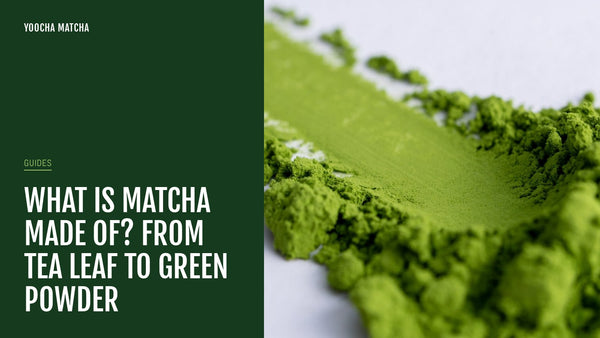
When you prepare matcha, the powder remains in the cup. With most loose-leaf green teas, water extracts flavor from the leaves, which are then removed before drinking. Matcha therefore has a different texture as well as a different preparation method.
It helps to separate the questions people often mean when asking where matcha comes from:
- The roots of powdered tea: earlier tea practices in China.
- The development of modern Japanese matcha: cultivation and processing traditions refined in Japan.
- The origin of a particular product: the country stated for the tea in that package.
A Japanese name alone does not establish where a product was grown, and a historical connection to China does not tell you the origin of the powder on your kitchen shelf.
How did powdered tea travel from China to Japan?
Powdered-tea practices reached Japan through exchanges with China over time. The history is better understood as a transfer of knowledge than as a single invention.
Earlier Chinese tea preparation included grinding processed tea and mixing the powder with hot water, providing a historical connection to the whisked drink that later developed in Japan. Yet it would be misleading to assume that every early powdered tea had the same growing conditions or processing steps as a modern matcha. Tea-making methods changed as people adapted them to local cultivation and preparation. The shared use of powder establishes a connection, while the later production history explains the differences. A modern tin has a longer backstory than its label can hold. The details developed over time.
The Kyoto Prefectural Tea Research Institute identifies 1191 as a key date in this story. Its historical account records Eisai’s return from Song China and says he is credited with bringing the matcha method to Japan.
The wording deserves care because a historical attribution does not establish that one person created the complete cultivation, processing and preparation system used for matcha today. It marks a point in the transmission of tea knowledge.
For a reader choosing matcha in the UAE, this history explains why “Chinese roots” and “Japanese tea” can both appear in accurate descriptions. One describes an earlier practice; the other describes the tradition in which modern Japanese matcha took shape. Neither phrase, on its own, is enough to describe a specific product’s sourcing.
How did Japan develop the matcha we recognize today?
Japan’s contribution includes how the leaves are grown and processed. The familiar green powder emerged through developments that continued long after powdered tea arrived.
Shading is central to the production of Japanese matcha. Before harvest, the tea plants are shaded; the harvested leaves then undergo processing to produce tencha, which is milled into the finished powder. Unlike the leaves used for sencha, a widely consumed Japanese green tea, tencha is not rolled into the familiar needle-like shape. These differences help explain why matcha is more than an ordinary brewed tea put through a grinder. Its identity begins before the mill. Cultivation and processing work together.
The Kyoto Prefectural Tea Research Institute places the opening of Uji tea gardens around 1360 and the appearance of shading in Uji around 1600. The same historical account records mechanization of tencha production from 1919, showing that the production tradition continued to change.
| Historical development | Date in the supplied source | What it helps explain |
|---|---|---|
| Eisai returns from Song China | 1191 | A key point in the transmission of powdered-tea knowledge |
| Tea gardens open in Uji | Around 1360 | The development of an important Japanese tea-growing area |
| Shading appears in Uji | Around 1600 | A cultivation practice associated with modern matcha production |
| Tencha production becomes mechanized | From 1919 | Changes in how the leaf material for matcha was processed |
These dates describe stages in a developing tradition, so they should not be compressed into a claim that today’s matcha appeared fully formed at one moment.
That gradual development also explains matcha’s place in Japanese tea ceremony. The preparation acquired a cultural setting alongside changes in cultivation and processing. You can appreciate that history while enjoying a simple morning cup at home.
Where in Japan is matcha produced?
Japan produces tea for matcha in several growing regions. Kyoto is historically important, while other prefectures also contribute substantially to present-day production.
Regional discussions become confusing when reputation is treated as a measure of output. Uji, in Kyoto Prefecture, has a prominent place in matcha history, but that does not mean Kyoto produces the largest quantity of leaf material for matcha. Japan’s Ministry of Agriculture, Forestry and Fisheries, known as MAFF, reports production figures for tencha. These figures describe the material that will be milled into matcha, rather than retail tins or finished drinks. Keeping that distinction visible makes the numbers useful. Volume and suitability are different questions.
According to the supplied MAFF data, the leading prefectures for tencha production in 2023 were:
| Prefecture | Tencha production | Share reported in the source |
|---|---|---|
| Kagoshima | 1,585 tonnes | 38% |
| Kyoto | 970 tonnes | 23% |
| Shizuoka | 505 tonnes | 12% |
MAFF’s October 2026 overview reports that the order remained the same in 2025. These are Japanese prefectural figures; they do not establish a worldwide production ranking or tell you how a particular powder will taste.
Aichi also has an established matcha history, particularly around Nishio. The Global Japanese Tea Association records tea planting near Jissoji in 1271, the arrival of matcha-making knowledge from Uji in 1872, and registration of the “Nishio matcha” trademark in 2009.
For your own purchase, a named region provides useful sourcing detail when the supplier can substantiate it. A country-level statement such as “Japan” is less specific, but it can still be accurate. The information supplied for YOOCHA MATCHA identifies its matcha as Japanese; it does not establish a particular prefecture, so a more precise origin should not be assumed.
How does matcha differ from other Japanese green teas?
Japanese green teas share a plant, yet preparation changes the cup. Leaf treatment and processing explain more than the broad description “green tea.”
Matcha is prepared as a suspension of fine powder in water, which gives the drink its characteristic body and makes whisking part of the preparation. Sencha is generally prepared by steeping processed leaves and separating them from the liquid, producing a different drinking experience even though both are Japanese green teas. Hojicha is roasted green tea, and roasting shifts its character toward warm, toasted aromas. Hojicha can be sold as loose tea or as powder. The form determines how you prepare it. Check the package before starting.
| Tea or tea material | What distinguishes it | How it is commonly used |
|---|---|---|
| Matcha | Fine powder made from processed, shaded tea leaves | Whisked with water or mixed into drinks and food |
| Sencha | Leaves are rolled during processing | Steeped in water, then removed |
| Gyokuro | Shaded green tea processed as leaves for infusion | Steeped in water, then removed |
| Tencha | Processed leaf material used to make matcha | Milled into matcha |
| Hojicha | Green tea that has been roasted | Steeped as leaves or mixed into drinks when powdered |
Shading alone does not make a tea matcha: gyokuro is also shaded, but its processing and usual preparation differ from those of tencha and matcha.
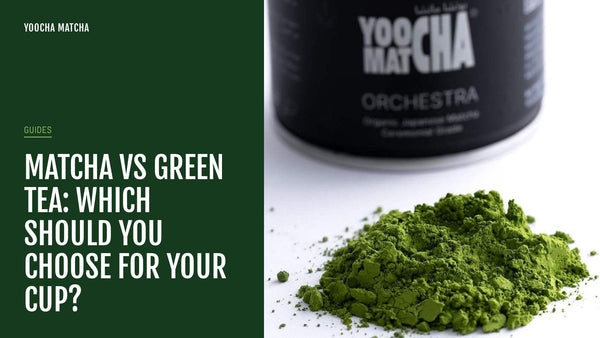
Color offers another useful distinction, although it should never be the only buying test. Matcha is green, while roasted hojicha has a brown appearance and a toasted aroma. A powder’s color can help you understand what you are looking at, but lighting and photography make online comparisons uncertain.
For someone moving from a matcha latte to a roasted tea drink, Premium Hojicha Powder is a Japanese option with a toasty, less bitter profile. Its brown color is part of its roasted character. Expect a different flavor direction in the cup.
What should you check when buying Japanese matcha?
Start with a clear origin statement and your preferred drink. Historical prestige cannot tell you whether a particular powder suits your morning latte.
A useful product description connects the tea’s origin with its intended preparation. Matcha chosen for drinking with water alone needs to be enjoyable without milk softening its flavor, whereas a latte powder needs enough presence to remain noticeable in the finished drink. Labels such as “ceremonial” and “premium” can communicate a supplier’s intended use, but they are not a universal grading system applied identically across all sellers. Read the explanation behind the label. That is where practical guidance begins. Your usual cup should guide the choice.
Use this checklist when assessing any matcha:
- Country of origin: look for an explicit statement about the tea’s origin.
- Intended use: check whether the powder is recommended for drinking straight or making lattes.
- Product form: distinguish plain matcha from a sweetened drink mix.
- Pack size: choose an amount that suits how regularly you prepare it.
- Storage instructions: check how the supplier recommends protecting the powder after opening.
- Preparation guidance: look for clear advice on mixing and adjusting the drink.
A regional name may add useful detail, but it cannot replace clear product information or establish that you will prefer that tea’s flavor.
For drinking straight, Organic Ceremonial Grade Japanese Matcha Powder is YOOCHA MATCHA’s option for usucha (thin matcha) and koicha (thick matcha). These are different preparations, with koicha using a more concentrated mixture.
Straight matcha lets you notice its aroma and texture without milk. Start by deciding whether that is the experience you want. A café-style latte calls for a different buying decision, even when both powders come from Japan.
How is matcha used beyond a traditional bowl?
Matcha’s Japanese identity also extends to everyday drinks and food. Its fine texture makes it useful wherever you want tea flavor throughout a mixture.
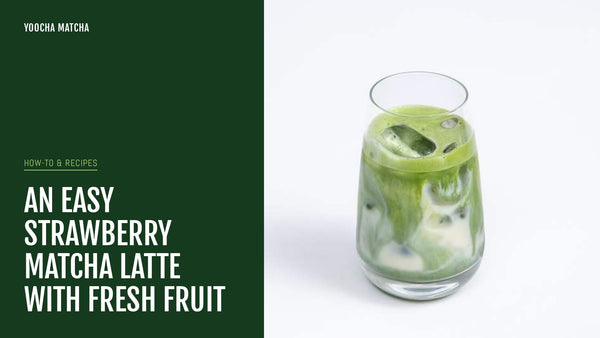
An iced latte is a familiar starting point in the UAE, especially when a cold glass suits the afternoon better than a warm bowl. Milk changes how the tea tastes, while ice gradually dilutes the drink as it melts. That means a powder that seems strong in water may feel balanced once the latte is assembled. Taste the complete drink before deciding whether it needs adjustment. Sweetener can be added afterward. The finished glass is the useful test.
Matcha can also be incorporated into food, where its flavor needs to remain noticeable alongside the other ingredients. More powder does not automatically make a better dessert, because increasing the amount can change both the balance of flavor and the texture of the mixture.
Common uses include:
- Iced lattes: a mixed matcha base poured into cold milk over ice.
- Hot lattes: prepared matcha combined with warm milk.
- Ice cream: matcha dispersed through the base for an even tea flavor.
- Cakes: powder incorporated into the batter.
- Cream fillings: matcha blended carefully to avoid dry pockets.
- Dessert sauces: a smooth matcha mixture added to the sauce.
The Global Japanese Tea Association reports that about 90% of Aichi’s matcha goes into food production, illustrating how established culinary use is within a Japanese producing region. That figure concerns Aichi specifically; it should not be extended to all Japanese matcha.
At home, sifting helps break up clumps before the powder meets liquid. Mix the matcha thoroughly before combining it with a larger drink or dessert mixture. For guests at a Ramadan evening gathering, an iced matcha latte can be prepared to suit the sweetness each person prefers.
How should you store matcha in the UAE and GCC?
Heat makes careful matcha storage especially useful in the Gulf. Protect an opened tin from warmth, moisture, light and strong surrounding smells.
For an open tin in the UAE or GCC, refrigeration helps keep the powder away from persistent household heat. The container should be tightly sealed, because a refrigerator also contains moisture and food aromas that you do not want reaching the tea. Before opening a chilled tin, allow the sealed container to approach room temperature so that humid air is less likely to condense on the cold powder. Opening it immediately on a warm kitchen counter can introduce moisture. Keep the scoop dry as well. Small habits protect the next cup.
A kitchen shelf beside an oven or a sunlit window is a poor place for matcha. Choose a cool storage position before opening, and follow the package instructions where they give more specific guidance.
A practical routine keeps the powder protected between drinks:
- Close the lid securely after measuring.
- Keep an opened tin sealed in the fridge during hot conditions.
- Let the sealed tin warm before opening it.
- Use a clean, dry spoon or scoop.
- Keep the container away from strongly scented foods.
- Avoid leaving the tin on the counter while you finish preparing everything else.
The most suitable pack is one you can use regularly, so choose according to your actual routine rather than assuming a larger quantity will always be more practical.
For a household making occasional weekend lattes, a smaller pack may be easier to manage. A café preparing drinks throughout service has different requirements. In both cases, storage remains part of the cup’s flavor long after the question of origin has been answered.
Frequently asked questions
Is matcha originally Chinese or Japanese?
The roots of powdered-tea preparation are Chinese, while modern Japanese matcha developed through cultivation and processing practices refined in Japan. The clearest answer distinguishes the earlier technique from the tea recognized as Japanese matcha today.
Does all matcha come from Japan?
Products labeled matcha are sold with different countries of origin. If you want Japanese matcha, look for an explicit Japanese origin statement rather than relying on the product name or the style of its packaging.
Was matcha invented in Uji?
Uji played an important role in the development of Japanese matcha. Powdered-tea practices existed earlier in China, while Uji’s documented history includes tea gardens around 1360 and shading around 1600, according to the Kyoto Prefectural Tea Research Institute.
Is Kyoto the largest Japanese producing region?
The supplied MAFF figures place Kagoshima ahead of Kyoto for tencha production in 2023, with Shizuoka next. MAFF’s October 2026 overview reports the same order for 2025. These figures measure tencha, the material milled into matcha.
Is matcha simply ground sencha?
Japanese matcha is made from tencha, which follows a different processing route from sencha. Grinding a tea into powder does not establish that it has undergone the cultivation and processing associated with matcha.
Does Japanese origin mean a matcha is ceremonial grade?
Japanese origin identifies where the tea comes from. “Ceremonial” describes a supplier’s positioning or intended use and is not a universally standardized grade, so read the product’s preparation guidance as well as its origin statement.
Can Japanese matcha be used in an iced latte?
Yes. Choose a powder intended for lattes, mix it smoothly before adding milk, and taste the finished drink after adding ice. The milk and dilution influence how strongly the tea comes through.
Choose your next matcha by how you drink it
Matcha’s history connects Chinese powdered-tea practices with later Japanese development. That gives you a clear answer about its roots, while the label on your tin answers the separate question of where your own tea comes from.
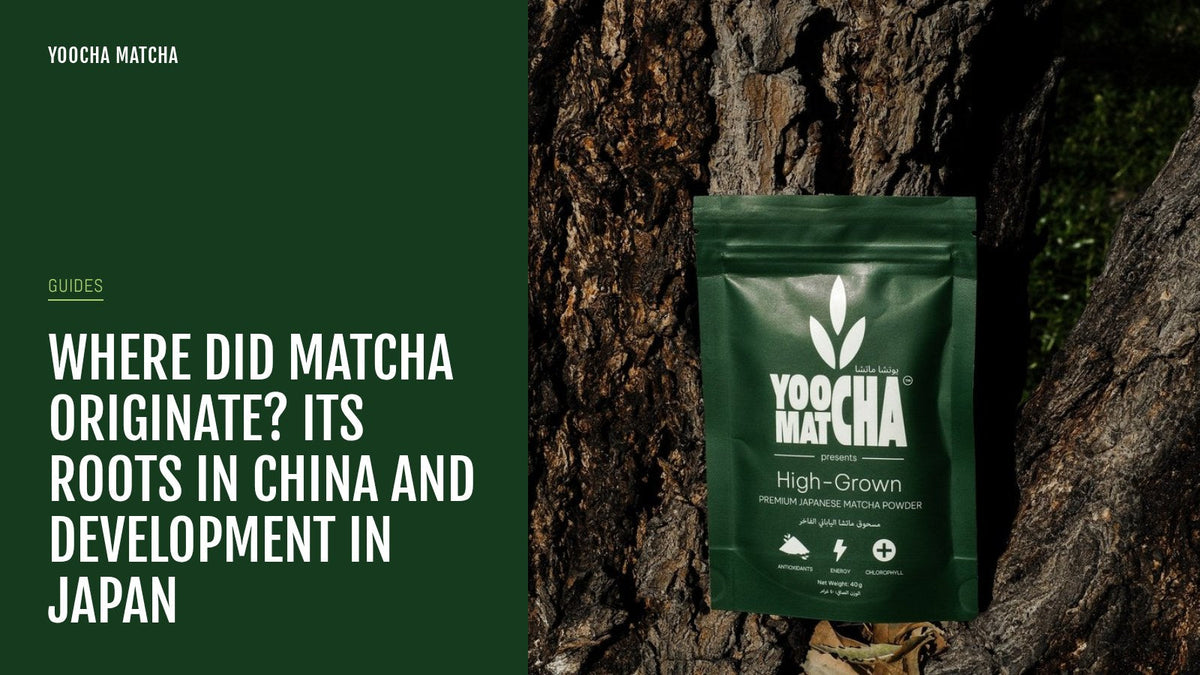
When choosing your next pack, look for a stated origin and a clear explanation of the drink it suits, then match the quantity to your routine. For everyday cups and lattes, High-Grown Premium Japanese Matcha Powder is the relevant YOOCHA MATCHA option.
Sources
- Historical dates and production figures are attributed to the following sources. Product uses and pack information come from the company materials supplied for this article.
- Kyoto Prefectural Tea Research Institute, tea history: Eisai’s return in 1191 and the attributed transmission of the matcha method; Uji tea gardens around 1360; shading around 1600; tencha mechanization from 1919. Historical account.
- Japan’s Ministry of Agriculture, Forestry and Fisheries (MAFF), tea production materials: 2023 tencha output and shares for Kagoshima, Kyoto and Shizuoka. Production document.
- MAFF, “茶をめぐる情勢” (Tea Situation), October 2026: the reported order of the leading Japanese tencha-producing prefectures in 2025.
- Global Japanese Tea Association, “Aichi”: tea planting near Jissoji in 1271; matcha-making knowledge arriving from Uji in 1872; the approximate 90% food-production share for Aichi’s matcha; Nishio matcha trademark registration in 2009. Regional history.
- YOOCHA MATCHA company product and editorial brief: Japanese product origins, intended uses, exact product names, product-page addresses and storage guidance for the UAE and GCC.
Keep reading