How to Prepare a Matcha Whisk Before Your First Cup
Prepare your matcha whisk by soaking its bamboo tips in water for 1–2 minutes before use. This softens the fine tines so they can move more freely through the tea. Then whisk with a light wrist, rinse without soap, and let the whisk dry completely in open air.

In this article (9)
- What preparation does a new matcha whisk need?
- What do you need beside the whisk?
- How do you move the whisk through matcha?
- How do you make hot and iced matcha with the prepared whisk?
- What should you change if whisking feels difficult?
- How do you clean and dry a bamboo whisk?
- Where should you keep the whisk and matcha between cups?
- What should you do before your next cup?
- Frequently asked questions
What preparation does a new matcha whisk need?
A chasen (bamboo whisk) needs a gentle rinse and a short soak. You do not need an elaborate preparation ritual before making your first bowl.
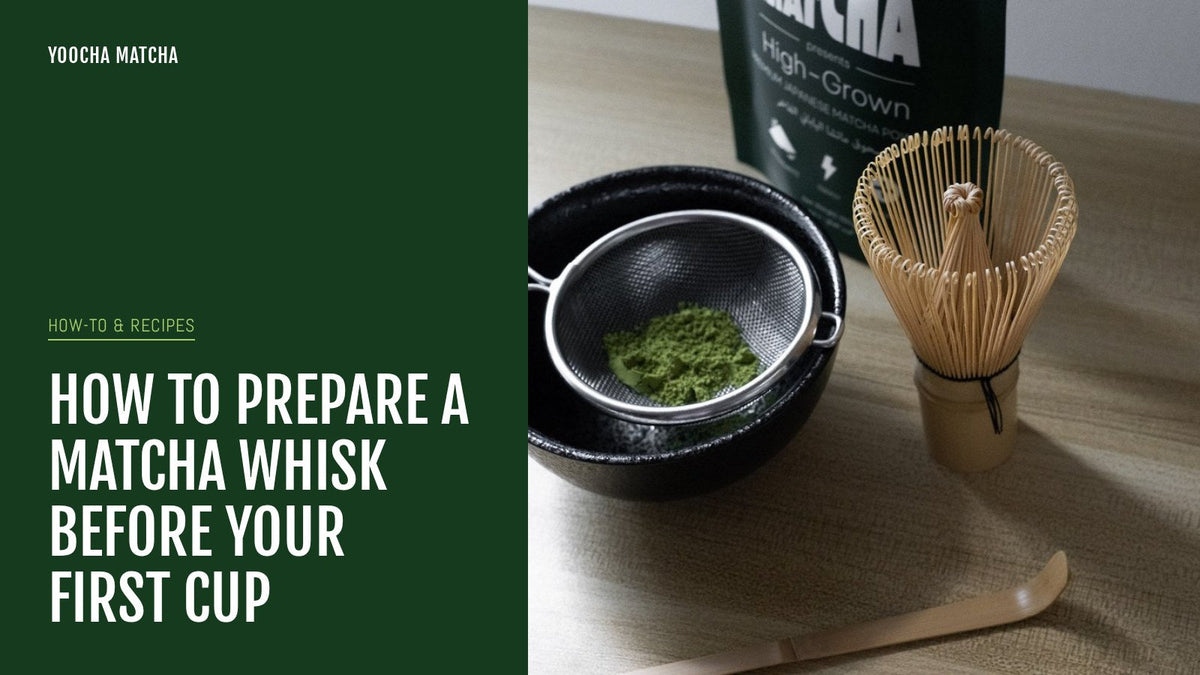
Start by inspecting the bamboo in good light, turning the handle so you can check the fine tines for visible damage or anything caught between them. The tines are the narrow bamboo strands that move through the tea. Handle them gently, especially while they are dry. If the whisk comes in a presentation box or plastic case, remove it for preparation and keep the packaging away from splashes at the sink. Avoid pulling the curled tips apart with your fingers, because forcing the bamboo can damage the delicate ends before you have made your first cup. Let the water soften them.
Prepare the whisk each time you make matcha, including after its first use. A whisk that has dried between cups benefits from the same brief soak before returning to the bowl.
Follow this sequence while you get the matcha ready:
- Check the tines. Look for broken strands, loose fragments, or signs of mold.
- Rinse the whisk head. Pass clean water gently through the tines.
- Soak the tips for 1–2 minutes. Stand them in a bowl of water without pressing down.
- Lift and drain. Let excess water fall away without wringing or squeezing the bamboo.
- Empty the soaking water. Dry the bowl if you will use it to sift your matcha.
Use the soaking time to measure the tea and heat your water, so preparation becomes part of making the drink rather than a separate chore. There is no need to hold the whisk under pressure against the bowl while it soaks.
What do you need beside the whisk?
A little preparation makes whisking easier and keeps the counter manageable. Give yourself enough room to move your wrist comfortably above the bowl.
The bowl matters because the whisk needs space to travel forward and backward without repeatedly striking the sides or dragging along a narrow base. A cramped mug makes that movement harder to control. Choose a bowl with enough width for a relaxed zigzag, then keep your serving glass nearby if you are making an iced drink. Sifting also helps: the whisk disperses the powder through water, while a strainer breaks up dry clumps before they become wet lumps that are harder to work through. These small choices reduce unnecessary pressure on the bamboo. Keep the setup simple.
Gather the following tools and ingredients before you begin:
- A clean chasen.
- A bowl with room for the whisk to move.
- A small strainer for sifting.
- A scale for measuring the powder.
- Matcha powder.
- Water for soaking and preparing the tea.
- A whisk holder for drying.
- A glass and ice for the iced version.
A chashaku (bamboo scoop) is useful for transferring powder, although a scale makes the amount easier to repeat. The supplied preparation method uses 2 g of matcha, approximately 1 level teaspoon; use the weight when you want consistency between cups.
You can make a morning bowl with a modest set of tools, so choose equipment according to how you actually prepare and serve your tea. A pouring spout is convenient when transferring whisked matcha into a cold glass, but comfortable whisk movement is the first thing to check.
How do you move the whisk through matcha?
Whisk in an M-shaped zigzag using a relaxed wrist movement. Travel forward and backward through the tea rather than stirring around the bowl.
Keep the handle comfortable in your fingers and allow your wrist to provide the movement, with your arm steady enough that the bowl stays under control. Pressing the tines into the base adds friction. The tips should move through the liquid without being used to scrape settled powder from the bowl, and the handle should feel light rather than clenched in your hand. Aim to finish the whisking in about 15 seconds, following the supplied Japanese preparation method. Inspect the drink before deciding whether anything needs changing next time. Foam takes practice.
For a beginner, the most useful sequence is straightforward:
- Hold the bowl steady. Set it on a stable surface and support it with your free hand.
- Place the whisk in the tea. Keep the tines free from firm downward pressure.
- Move your wrist forward and backward. Make a compact M-shaped zigzag through the liquid.
- Whisk vigorously for about 15 seconds. Keep the motion light enough to avoid scraping.
- Lift the whisk gently. Check the surface and the mixture underneath.
A light layer of fine bubbles is a helpful visual cue, but foam alone does not tell you whether the powder was properly sifted or evenly dispersed. Look for visible clumps as well.
It takes two or three tries to get the foam right, and that is normal. If your first bowl has large bubbles or an uneven surface, pay attention to your grip and bowl space before adding more force or extending the whisking.
How do you make hot and iced matcha with the prepared whisk?
Use the same measured base while you learn the whisking movement. Changing fewer variables makes it easier to understand what improved your cup.
Usucha (thin matcha) is a preparation made with matcha and water, giving you a clear view of the tea’s color and the texture created by your whisk. For a typical starting method, use 2 g of sifted matcha with 60 ml of water at around 80 °C (176 °F), then whisk for about 15 seconds. That amount is a small serving with a concentrated tea flavor. The iced version uses the same warm-water preparation poured over ice, while the cold-whisked version starts with chilled water instead. Each offers a useful way to practice. Choose the temperature you enjoy.
| Preparation | Matcha | Water | Whisking | Finish |
|---|---|---|---|---|
| Hot thin matcha | 2 g | 60 ml at around 80 °C (176 °F) | About 15 seconds | Drink from the bowl |
| Iced matcha | 2 g | 60 ml at around 80 °C (176 °F) | About 15 seconds | Pour over ice |
| Cold-whisked matcha | 2 g | 60 ml chilled water | About 15 seconds | Serve cold |
Make hot thin matcha
- Soak the whisk tips in water for 1–2 minutes.
- Empty the soaking water and dry the bowl.
- Sift 2 g of matcha into the bowl.
- Add 60 ml of water at around 80 °C (176 °F).
- Whisk in an M-shaped zigzag for about 15 seconds.
- Enjoy the tea, then rinse the whisk promptly.
The small serving lets you notice the aroma above the bowl and the feel of the tea as you drink, without milk changing the flavor. For this preparation, YOOCHA MATCHA’s Organic Ceremonial Grade Japanese Matcha Powder is intended for drinking straight.
Make iced matcha
- Prepare the whisk with the same brief soak.
- Sift 2 g of matcha into a dry bowl.
- Add 60 ml of water at around 80 °C (176 °F).
- Whisk for about 15 seconds using the same wrist movement.
- Pour the prepared matcha over ice in a glass.
On a hot Dubai afternoon, prepare the matcha before taking the glass outside, so you can pour and serve while the ice is still firm. This also works as a base for an iced latte: add your preferred milk after whisking.
Make cold-whisked matcha
- Soak the whisk tips, then empty and dry the bowl.
- Sift 2 g of matcha into the bowl.
- Add 60 ml of chilled water.
- Whisk in an M-shaped zigzag for about 15 seconds.
- Pour into a glass and serve cold.
Keep the whisk in the bowl when preparing the base; ice cubes crowd the tines and interrupt the movement you are trying to learn. Add ice at the serving stage.
What should you change if whisking feels difficult?
Most beginner difficulties are easier to solve before whisking begins. Check the powder and bowl before changing your technique.
When a clump remains in the drink, it is tempting to push the whisk down and crush it against the bottom of the bowl. That puts unnecessary pressure on the bamboo. Sifting the powder into a dry bowl gives you a better starting point, while soaking the tines lets them flex more comfortably during the movement. A narrow cup can create another problem because the whisk keeps meeting the sides before your wrist develops a steady rhythm. Move to a wider bowl if the motion feels cramped. Let the tools move freely.
Use the visible problem to decide what to adjust:
| What you notice | What to check | What to change |
|---|---|---|
| Dry lumps in the drink | Whether the powder was sifted | Sift into a dry bowl before adding water |
| Tines catching or scraping | Downward pressure and bowl space | Lighten your grip and use a roomier bowl |
| Tea splashing over the edge | The size of your wrist movement | Make a more compact zigzag |
| Little foam | Grip and whisk movement | Practice a light, brisk forward-and-back motion |
| Residue between the tines | Cleaning after the previous cup | Rinse promptly and inspect before drying |
| A bitter-tasting cup | Water temperature and preparation | Return to the measured method before changing several things |
Taste also depends on the powder and the concentration, so a bitter cup does not automatically mean the whisk is damaged or that your hand movement is wrong. Follow the same ratio while practicing.
Avoid chasing a large cap of foam by repeatedly extending the whisking, since the supplied method calls for a brief preparation of about 15 seconds. A comfortable movement and a drink without obvious dry clumps are useful early goals.
How do you clean and dry a bamboo whisk?
Rinse the whisk promptly, then give it space to dry. Cleaning is easier before matcha residue dries between the fine tines.
After pouring your drink, rinse the whisk head with clean water and turn it gently so water can reach the spaces between the bamboo strands. Use no soap. If tea remains, move the whisk lightly through clean water in the bowl, then rinse again and check the inner tines without pulling them apart. Avoid scrubbing the delicate tips or squeezing the head to remove moisture, because those actions put pressure on the parts that need to stay flexible. Place the clean whisk on its holder in open air. Let it dry fully.
Make this the end of each preparation:
- Rinse without soap. Wash away visible matcha while the residue is still wet.
- Inspect the whisk head. Look between the tines for remaining powder.
- Drain gently. Allow excess water to fall away.
- Place it on a whisk holder. Keep it exposed to air as it dries.
- Check before storing. Return it to enclosed packaging only when completely dry.
A whisk kept in its box while damp can grow mold, so a tidy-looking closed case is a poor place to put it immediately after washing. The drying stage deserves as much attention as the initial soak.
In a UAE or GCC kitchen, choose an open spot away from sink splashes rather than assuming warm room temperatures will dry a whisk inside its container. Before the next cup, check for visible mold or damaged tines and replace a whisk that is no longer suitable to use.
Where should you keep the whisk and matcha between cups?
Store the whisk dry, and protect the powder from heat. They need different storage conditions once you have finished making your drink.
The whisk belongs in a clean, dry place after it has aired completely, while an open tin of matcha is better kept tightly sealed in the fridge during UAE and GCC heat. Keep the powder away from moisture. When taking a refrigerated tin out for use, allow it to come toward room temperature while still closed before opening it, which helps limit condensation reaching the powder. A damp bowl or scoop can also introduce moisture directly, so finish drying your measuring tools before they touch the tea. Keep water at the whisking stage.
During a busy morning, it helps to leave the rinsed whisk on its holder while you put the sealed matcha away. Neither task needs much handling once the drink is ready.
For guests or Ramadan evening gatherings, set out the serving glasses and dry tools before starting, leaving enough counter space to prepare each bowl without crowding the whisk. After serving, return to the same rinse-and-dry routine instead of putting a damp whisk away with the rest of the kit.
What should you do before your next cup?
Begin with a brief soak and a measured bowl of matcha. Practice the same light movement until it feels comfortable in your hand.
The useful routine stays consistent: soak the tips for 1–2 minutes, sift the powder into a dry bowl, and whisk with your wrist before rinsing and air-drying the bamboo. If you already have a sound whisk, start there. When choosing your first tool, YOOCHA MATCHA’s Chasen is the bamboo whisk for this preparation.
Frequently asked questions
Do you need to soak a new matcha whisk before using it?
Yes. Rinse it gently, then soak the tips in water for 1–2 minutes before preparing the tea. Check for visible damage first, and avoid pulling the curled ends apart by hand.
Should you soak the whisk before every cup?
Soak the tips before each preparation session, especially when the whisk has dried since its last use. The brief soak softens the fine bamboo tines before they move through the tea.
Can you prepare matcha with chilled water?
Yes. The supplied cold-whisked method uses 2 g of sifted matcha with 60 ml of chilled water, whisked for about 15 seconds. Prepare the whisk with its usual soak first.
How long should you whisk matcha?
Aim for about 15 seconds using a vigorous M-shaped zigzag driven by your wrist. If lumps remain, review sifting and bowl space before relying on a longer whisking time.
Can you wash a bamboo whisk with soap?
Rinse it without soap after use. Move it gently through clean water if residue remains, then inspect the tines and leave it to dry in open air on a whisk holder.
Can you put the whisk back in its box after rinsing?
Wait until it is completely dry. Enclosing a damp bamboo whisk can allow mold to grow, so leave it exposed to air on its holder after rinsing.
Do you need different whisks for hot matcha and iced lattes?
The same bamboo whisk can prepare both bases. Whisk the matcha and water in a bowl, then pour into your serving glass before adding ice and milk.
Sources
- YOOCHA MATCHA supplied preparation reference: standard Japanese matcha methods. Source for the 2 g matcha and 60 ml water ratio, approximately 1 level teaspoon, preparation at 80 °C, about 15 seconds of whisking, M-shaped wrist movement, and chilled-water variation. The 176 °F figure is the conversion of 80 °C.
- YOOCHA MATCHA supplied bamboo whisk care guidance. Source for soaking the tips for 1–2 minutes, rinsing without soap, drying in open air on a whisk holder, and the risk of mold when a damp whisk is enclosed.
- YOOCHA MATCHA company and product information supplied for this article. Source for product names, product links, intended uses, and refrigerated storage of open matcha tins in regional heat.
Keep reading