Matcha Latte with Oat Milk: Hot and Iced
Make a matcha latte with oat milk by whisking 3 g matcha with 90 ml water at 80 °C (176 °F), then adding milk to taste. Use warm oat milk for a hot cup, or pour the base over cold milk and ice.

In this article (9)
- What do you need for a matcha latte with oat milk?
- Which matcha and oat milk should you choose?
- How do you make the hot version?
- How do you make the iced version?
- How can you adjust flavor, sweetness, and texture?
- Why is your latte clumpy, gritty, or separated?
- How should you store matcha in UAE and GCC heat?
- Frequently asked questions
- Make your first cup, then adjust the milk
What do you need for a matcha latte with oat milk?
A smooth matcha base lets the tea’s flavor come through the rounded texture of oat milk.
Matcha is finely ground Japanese green tea whisked into water. The powder stays suspended, which explains why careful mixing matters and a little settling can happen beside breakfast. Oat milk softens the flavor, although sweetness and thickness vary between cartons. Start with less milk if you enjoy a clear tea flavor, then taste before adding more.
Gather these ingredients:
- Matcha: 3 g.
- Water: 90 ml at 80 °C (176 °F).
- Oat milk: start with 150 ml; increase toward 180 ml for a milkier drink.
- Ice: enough for your glass, for the iced version.
- Sweetener: optional, to taste.
The matcha and water quantities follow YOOCHA MATCHA’s standard latte base. The milk quantity is a recipe starting point; adjust it to your carton and preferred tea strength.
You will also need:
- A kitchen scale.
- A small strainer.
- A bowl with room to whisk.
- A chasen (bamboo whisk), or a handheld milk frother.
- A measuring jug.
- A cup or glass.
- A saucepan or milk steamer for the hot version.
A spoon helps stir the finished drink, but struggles with dry matcha clumps. Sifting before whisking makes the base easier to smooth out. A bowl wide enough for the whisk to move freely also makes preparation more comfortable.
Which matcha and oat milk should you choose?
Choose matcha that remains noticeable through milk, then an oat milk whose sweetness suits your cup.
Because milk changes the balance of the tea, a powder suited to everyday lattes is a sensible starting point. YOOCHA MATCHA’s High-Grown Premium Japanese Matcha Powder fits this use while you learn your preferred ratio. At the same time, the oat milk matters: cartons differ in sweetness and texture, so taste the milk alone before deciding on syrup. Although stale aroma or dull powder deserves a closer check, color alone cannot tell you everything about matcha quality. Judge the finished cup too, because the combination of powder and milk determines how clearly you taste the tea.
Use the carton label to guide your first choice.
| Oat milk type | What to expect | How to use it |
|---|---|---|
| Unsweetened | More control over sweetness | Taste before adding syrup |
| Sweetened | Sweetness already in the cup | Check whether it needs more |
| Barista-style | Formulated for texture or foaming | Try it for a foamed hot latte |
| Flavored | Added flavor may compete with tea | Choose a flavor you want in the cup |
Barista versions may contain added plant protein or stabilizers, although foam varies between cartons. Shake according to the instructions before measuring to keep servings consistent.
How do you make the hot version?
Whisk the matcha base first, then gently heat the oat milk so you can control each temperature.
The base uses water at 80 °C (176 °F), while plant milk is typically heated to around 60–65 °C (140–149 °F). Gentler heating reduces the chance of splitting; near-boiling oat milk can lose its smooth texture, depending on its formulation. If you linger over breakfast, warm your cup with water and empty it before pouring.
- Measure and sift. Put 3 g matcha through a small strainer into your bowl.
- Add water. Measure 90 ml water at 80 °C (176 °F), checking its temperature before pouring.
- Whisk the base. Move briskly back and forth in an M-shaped motion for about 15 seconds, until smooth.
- Heat the milk. Warm 150 ml oat milk to around 60–65 °C (140–149 °F), avoiding a boil.
- Add foam if you like. Froth the warm milk until the texture suits you. A thick foam cap is optional.
- Combine and taste. Pour the matcha into your cup, add the milk, and stir. Increase the milk toward 180 ml for a softer tea flavor.
- Sweeten if needed. Taste the complete drink before adding your chosen sweetener.
Keep the bamboo whisk’s tips moving through the liquid without pressing hard against the bowl. Aim for an evenly mixed base; you do not need a towering layer of foam beneath the milk.
It takes two or three tries to get the foam right, and that’s normal. Your hand motion and the milk’s formulation both matter. Modest foam can still give you a smooth, inviting cup.
How do you make the iced version?
Whisk the matcha with warm water before it meets the cold milk.
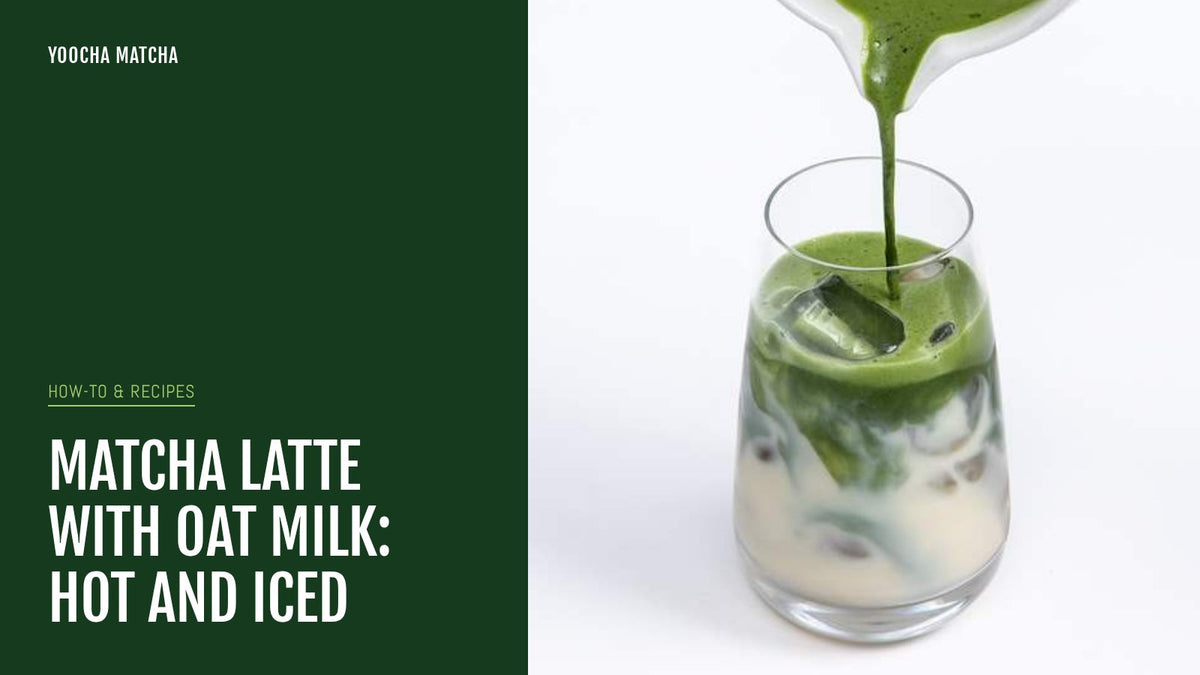
The iced version uses the same 3 g matcha and 90 ml water base, although melting ice gradually softens its flavor. Because that extra water changes the balance as you sip on a hot Dubai afternoon, start with 150 ml cold oat milk so the tea remains noticeable. Choose a glass with room for both the liquids and ice, leaving space to stir without spilling. The green layer above pale milk looks lovely in a clear glass, but stirring brings the layers together; therefore, mix before drinking so each sip has a similar balance.
Assemble close to serving, while the glass feels cold and the tea’s aroma is distinct.
- Prepare the glass. Add ice, leaving room for the milk and matcha base.
- Add milk. Pour in 150 ml cold oat milk.
- Sift the powder. Put 3 g matcha through a strainer into a separate bowl.
- Whisk. Add 90 ml water at 80 °C (176 °F) and whisk for about 15 seconds.
- Sweeten if needed. Mix sweetener into the warm base so it disperses easily.
- Pour and stir. Add the matcha to the iced milk and stir until the color is even.
For guests at a Ramadan evening gathering, set out the tools and measure ingredients ahead. Keep the oat milk refrigerated until you are ready to assemble the drinks.
How can you adjust flavor, sweetness, and texture?
Change one part each time so you can tell what improved the cup.
Begin by tasting the finished latte before adding syrup, because oat milk may already bring enough sweetness for your preference. A drink that tastes too milky may need less milk next time, while a harsh cup deserves a check of water temperature and powder freshness. Adding sweetener can soften the impression of bitterness, but it cannot remove clumps or restore a stale aroma. Notice which problem you are trying to solve before changing the recipe. Keep a brief note of the milk you used and whether you enjoyed the balance. Small adjustments are easier to repeat.
| What you notice | What to check | What to try |
|---|---|---|
| Tea flavor disappears | Milk quantity and sweetness | Start with 150 ml milk |
| Drink tastes too strong | Your preferred balance | Increase milk toward 180 ml |
| Latte tastes harsh | Water temperature and freshness | Check for 80 °C (176 °F) water |
| Drink is already sweet | Carton ingredients | Skip extra sweetener |
| Hot latte lacks foam | Milk formulation | Try barista-style oat milk |
| Iced latte turns watery | Time over melting ice | Assemble close to serving |
Organic Agave Syrup mixes readily into the warm base. Add it gradually: it tastes sweeter than cane sugar, so an equal quantity can oversweeten your cup.
For iced drinks, mix sweetener into the base before pouring. For hot drinks, stir it into the finished latte.
Why is your latte clumpy, gritty, or separated?
Check the matcha base first, then the milk temperature and serving method.
Matcha stays suspended rather than dissolving completely like sugar. Some settling is normal when a drink stands untouched, while dry pockets indicate incomplete mixing. Sifting breaks these up before water wets their outer surfaces and makes them harder to separate. A bowl gives the whisk more room than a narrow glass. Gently stirring brings settled powder back into the drink; large clumps need better preparation.
Check in the order you make the latte:
- Dry clumps: sift before adding water.
- Powder around the bowl: work it into the liquid while whisking.
- Gritty mouthfuls: inspect the base before adding milk.
- Split hot milk: reduce the temperature and avoid boiling.
- Fast-collapsing foam: check whether the milk is designed for frothing.
- Sediment in the glass: stir gently before another sip.
A handheld frother can mix the base if you do not have a bamboo whisk, although it may make larger bubbles or splash in a shallow bowl. Sift first with either tool.
Extra powder strengthens the tea and adds more particles to disperse, so it will not solve a mixing problem. Smooth out the base before changing the quantity; this also makes it easier to judge whether the ratio needs adjusting.
How should you store matcha in UAE and GCC heat?
Keep opened matcha tightly sealed in the fridge in a hot UAE or GCC kitchen.
Condensation can introduce moisture when a cold tin meets warm air. Let the sealed container come toward room temperature before opening it, keeping the lid closed during that transition. Use a dry scoop, then reseal promptly after measuring. Avoid leaving the tin beside a kettle or sunny window, and follow the pack’s storage instructions. Keeping the powder dry matters as much as keeping it cool.
Follow the oat milk carton’s directions after opening. Return it to the fridge after measuring, especially when preparing several drinks.
For family gatherings, organize the workspace and protect ingredients between cups. Set out the glasses and tools ahead, then mix drinks near serving time: preparing them far in advance leaves ice melting and powder settling. A freshly mixed base keeps the tea evenly distributed for those first sips.
Frequently asked questions
Can I whisk matcha directly into cold oat milk?
Clumps are harder to break apart in cold milk. Whisk with warm water first for a smoother base.
Do I need a bamboo whisk?
A handheld milk frother also works. Sift first and use a bowl with room to avoid splashing.
Should I use sweetened or unsweetened oat milk?
Unsweetened gives you more control over sweetness. Either works; taste the latte before adding syrup.
Why does my hot oat milk separate?
Excessive heat can split plant milk, although formulations vary. Heat gently to around 60–65 °C (140–149 °F) and follow the carton’s guidance.
Can I use the same matcha base for hot and iced drinks?
Yes. Whisk 3 g matcha with 90 ml water at 80 °C (176 °F), then add warm milk or combine with cold milk and ice.
Can I prepare the latte ahead for guests?
Set out equipment and measure ingredients ahead, then assemble near serving. Matcha settles, and melting ice changes the drink’s strength.
Make your first cup, then adjust the milk
Make the hot or iced version with your usual oat milk. Taste before sweetening, then adjust the milk quantity next time.
High-Grown Premium Japanese Matcha Powder suits everyday lattes. Note your preferred carton and quantities to make that morning cup easier to repeat.
Sources
- YOOCHA MATCHA preparation information: standard base of 3 g matcha with 90 ml water at 80 °C (176 °F), whisked for about 15 seconds.
- Recipe adaptation and supplied plant-milk guidance: 150–180 ml milk starting range adapted for oat milk; typical heating around 60–65 °C (140–149 °F); barista formulation notes.
- YOOCHA MATCHA product and storage information: matcha suitability for lattes, agave as a sweetener, and refrigeration of opened matcha in regional heat.
Keep reading